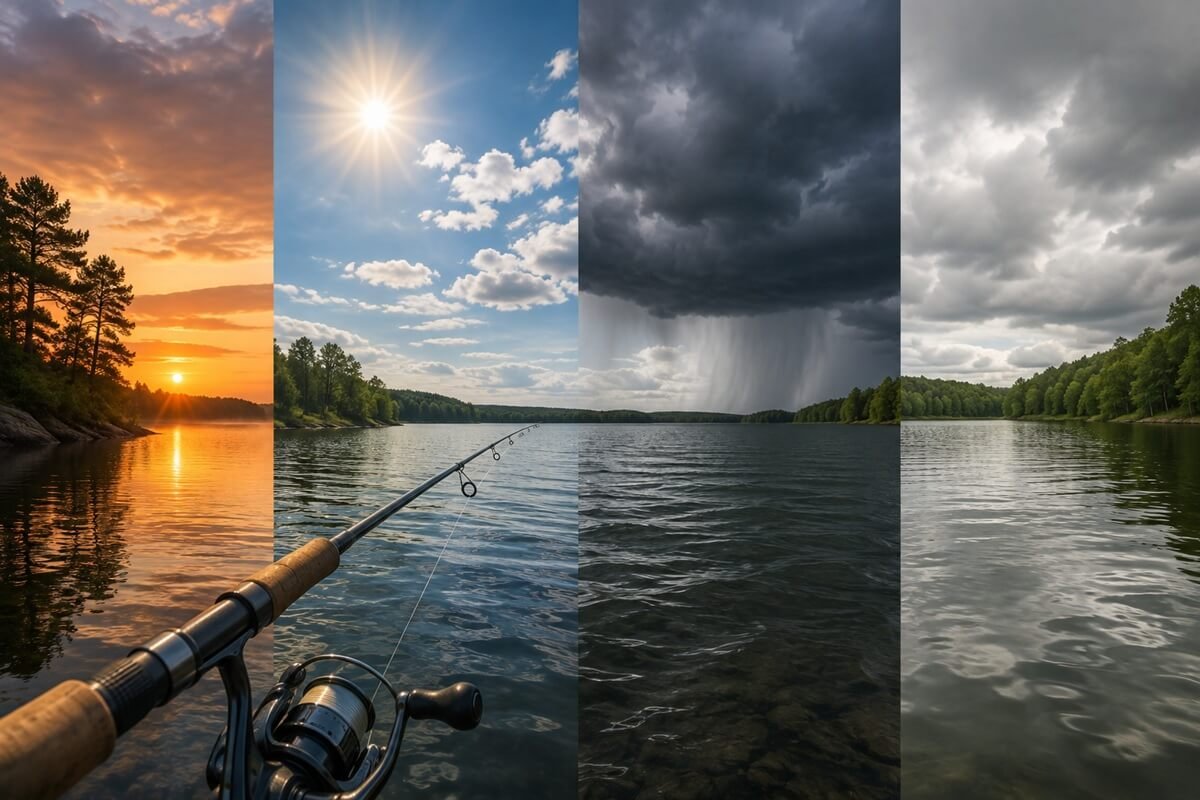
How Weather Patterns Affect Fishing Throughout the Year

How weather patterns affect fishing is one of the most common questions anglers ask before heading to the water. Changes in water temperature, air pressure, wind, rainfall, and seasonal conditions can all influence where fish are found, how actively they feed, and which techniques are most effective. Understanding these weather patterns can help you choose the best time to fish, improve your strategy, and increase your chances of landing more fish.
In this guide, you’ll learn how different weather conditions affect fish behavior, when fishing is likely to be most productive, and practical tips for planning successful trips throughout the year.
Our Experience
We tested these weather patterns while targeting bass, pike, trout, and panfish in lakes and rivers over multiple seasons. Although fish behavior varies by location, stable weather and gradual pressure changes consistently produced better catches than rapidly changing conditions.
Best Weather Conditions for Fishing (Quick Reference)
| Weather Factor | Best Condition | Fishing Quality |
|---|---|---|
| 🌡️ Water Temperature | Species-specific optimum (typically 15–22°C for many freshwater species) | ⭐⭐⭐⭐⭐ Excellent |
| 📉 Air Pressure | Stable or slowly falling | ⭐⭐⭐⭐⭐ Excellent |
| 🌬️ Wind | Light to moderate breeze (5–15 mph / 8–24 km/h) | ⭐⭐⭐⭐ Good |
| 🌧️ Before Light Rain | Falling pressure with light cloud cover | ⭐⭐⭐⭐⭐ Excellent |
| ☔ Heavy Rain & Storms | Thunderstorms or rapidly changing weather | ⭐ Poor |
| ☀️ Bright Midday Sun | Hot, cloudless afternoons | ⭐⭐ Fair |
| ☁️ Overcast Skies | Light cloud cover | ⭐⭐⭐⭐ Good |
| 🌅 Time of Day | Early morning and late evening | ⭐⭐⭐⭐⭐ Excellent |
Water Temperature – Why Is It Important?

The temperature in lakes and rivers has the biggest impact on fishing results. There is no fish that prefers to bite in hot water. As the water warms up, most fish seek a comfortable temperature on the bottom to cool off. Often only a small and inexperienced fish is caught.
In summer, it is recommended to fish in the mornings or evenings and nights when the water gets a little cooler and more oxygenated. The fish will rise closer to the surface of the water and perfect fishing can begin.
The temperature factor does not affect the catch in the winter season. Under the ice, the water temperature regardless of the body of water remains unchanged and can range from 0 to – 2 ℃. At great depths, the temperature is about +4 ℃.
The optimal temperature for fishing in summer is 15-22 ℃. Here it is worth considering that the digestion process of fish increases when the water temperature rises, but when the temperature drops, digestion also speeds up.
Choosing an optimal temperature for fishing also depends on the species of fish that you want to catch…
- Salmon prefer temperatures from 13 to 18 ℃.
- Carp bite perfectly at a temperature of 25 – 28 ℃.
- For zander, the optimal temperature varies from 14 to 20 ℃.
- Hunting for pike is successful when the water temperature is 15 ℃.
Depending on the increase and decrease in temperature, the behavior of the fish changes. This is an important parameter in all seasons of fishing. The air temperature is directly related to the air temperature. The difference between air and water temperature is determined by the time of day and the season. The wind can also cause temperature changes. It affects the upper layers of the water body.
Water Level and Water Color
The water level in the body of water does not always remain stable. Its increases or decreases are fairly common phenomena caused by various weather conditions and air temperatures.
The water level can change in both large and small bodies of water. Often, these include prolonged droughts, floods and frequent rains, as well as spring thawing of ice and snow. If a constant water level is ensured in the body of water, the fish will feel calm and be able to bite well.

The decrease in the water level is characteristic of the hot season, when it does not rain, for example, in summer. This parameter also depends on the size of the body of water. It fluctuates much more frequently in small lakes or rivers than in large bodies of water. When it happens in large lakes, a significant decrease in fish activity can be observed.
Raising the water level can affect fish activity. Most often it is possible during the melting of snow and ice in the spring or during frequent rains and floods in the summer. Spring is the period of the year when almost all fish spawn. Raising the water level has a positive effect on this process. However, you can catch some species of fish such as carp. The fish in this period is active.
During a gradual increase in water, the biting does not stop. This increases the oxygen level. The fish move actively, preferring to locate themselves closer to shore and find new feeding spots in shallow water.
The color of the water can also be a major factor in fishing. If the water is turbid and the sun’s rays weakly penetrate its thickness, the fish is practically not active. When the water is not so murky, it is an ideal condition for fishing. The fish sees the bait very well and at the same time does not notice the movements of the angler.
Air Pressure and Its Influence on Catch
In the abdominal cavity of each fish is an air-filled swim bladder. In addition to oxygen, it contains a small amount of nitrogen and carbon dioxide. By regulating the oxygen in the swim bladder, the fish achieves neutral swimming ability. This allows each fish to be easily located at different depths.
A fish’s swim bladder is more responsive to changes in air pressure than the barometer. When the pressure drops, the density of the water and the oxygen content change. It seriously affects the behavior of the fish.
The water in the lake and river has a certain hydrostatic pressure that differs from atmospheric pressure. A certain connection between them is evident. If there is a big difference between them, the fish loses its orientation. His appetite decreases and he becomes sleepy. Under these conditions, the bait will not attract the fish.
Air pressure can also activate the bite. The best bite can be observed when the atmospheric pressure is stable for several days or even weeks. The pressure drops, as well as low pressure, always affect the capture negatively. However, not all fish species respond equally to such changes. Increased pressure has a positive effect on small fish. They reach the surface of the water to find food.
Under reduced pressure, the predators activate. In addition, the small fish become lax and move slowly. That is why they can immediately become the prey of predatory fish. It means that with low air pressure, you can get a good catch of predatory fish such as pike and zander. The worse the weather, the better and more active the pike feels.
Does the Moon Matter in Effective Fishing?
Despite the fact that the influence of the phases of the moon on the bite is not perceived by every angler as an important factor such as pressure or wind, it should not be underestimated. The moon is a satellite of the Earth that affects gravity and magnetic fields. The full cycle for which the moon orbits the earth is 29.5 days and is called the lunar month. The lunar month is divided into eight phases.
The moon influences the activity of Pisces. Its influence is determined by the gravitational field, which causes an increase or decrease in the flow of water in rivers on Earth. In closed waters, the moon’s effect on Pisces is not clearly expressed. It is especially characteristic of shallow lakes and ponds.
The most significant events and processes occur during the new moon or full moon when the position of the sun, earth, and moon are on the same line relative to each other and both celestial bodies act synchronously with respect to our planet.
In the first and last quarter of the moon phases, when half of the visible part is illuminated, the rises and falls are least pronounced. During this time, the fish bite is most intense.
In large bodies of water when sea or deep sea fishing, the fish bite increases significantly when approaching. It can be explained by the fact that the water level is getting higher. The fish can find a variety of foods on the shore. Therefore, he wants to reach the shore, which can ensure successful fishing.
During different lunar cycles, the moon emits its light with different intensities. Accordingly, the lighting of the body of water changes. And with the intensity of the lighting, the behavior of the fish also changes. With good moonlight, the fish can see their prey better and are therefore better able to hunt it.
Wind and Wind Directions
As is already known, the bite depends on the strength and direction of the wind. It is not so pleasant to fish in windy weather, but the angler should know whether the fish like this weather. With many experiments conducted by both professionals and amateur anglers, the Southwest is the best wind for an excellent bite! The north and east winds negatively affect the bite and fishing as a whole.
The north and east winds bring cold air, which mixes with warm air to the south, forming a cold front. This front causes pressure and air temperature to drop. Rainfall is not uncommon, especially in summer. It should also be mentioned that the bite is not active in a strong west wind, which reaches about 6 to 8 meters per second. Nevertheless, with such weather, you can effectively catch bottom fish such as crucian carp, tench and perch.
Sometimes the bite improves with strong winds of different directions without visible reasons. But this phenomenon can be explained. The air currents not only mix the warm and cold water. They oxygenate the water and can create waves that bring food to shore. At the same time, the fish activates itself and feeds to the shore.
The strength of the wind can affect the bite and fishing in different ways. It doesn’t matter whether there is a south or north wind. When the wind is strong and gusty, it causes a lot of excitement in the water and the bite of many fish stops. The bite can only begin in a quiet period.
With a wind of weak and moderate strength, the waves appear on the surface of the water body and the bite improves. On such days you can successfully catch pike, perch, or asp with a spinning rod. With a strong wind on the border of the muddy and transparent waters, crucian carp and bream bite quite well. You can use a floating rod.
Is Fishing Better Before or After Rain?
For many freshwater species, fishing is often better before or during light rain than immediately after heavy rainfall. As atmospheric pressure begins to fall ahead of a weather system, fish frequently become more active and feed aggressively. Light rain can also cool the water, increase dissolved oxygen, and wash insects and other food into lakes and rivers.
After heavy rain, however, fishing conditions may temporarily worsen. Fast-moving water, muddy runoff, and reduced visibility can make it harder for fish to locate bait. Once the water begins to clear and stabilize, fish often return to their normal feeding patterns.
Quick Tips: If the forecast calls for a light shower instead of a thunderstorm, plan to fish a few hours before the rain arrives or while it is lightly raining.
Fishing Weather in Winter, Autumn, Summer and Spring
In winter, bream, roach, perch and zander bite well in stable, calm weather with moderate frosts without precipitation. The bite weakens before the weather changes when the frost intensifies and the snowfalls begin.
When it comes to spring fishing, the bite is ideal in clear, calm weather or when the wind is light. Fishing can deteriorate on the run-up and murky water. With a sharp change in atmospheric pressure, an increase and change in the direction of the wind, cooling and the onset of bad weather, the bite can stop.
In summer the bite will be successful in calm weather. The high air temperatures are undesirable for fishing. The fish hides in the cold waters on the bottom. The bite also worsens at the onset of water flowering, in very hot and dry or unstable weather with changing winds.
The end of summer and the first half of autumn are the best seasons with good weather for biting. Fishing can be effective in calm, cloudy weather with no precipitation. The bite does not become as effective when the wind picks up or bad weather begins.
Best Weather for Bass Fishing
Largemouth and smallmouth bass are generally most active when weather conditions remain stable. Overcast skies, moderate water temperatures, and a light breeze encourage bass to leave cover and hunt baitfish.
Some of the best bass fishing opportunities occur before a cold front arrives, when barometric pressure begins to fall gradually. During hot summer afternoons, bass usually move into deeper water or seek shade around docks, vegetation, and submerged structures.
Ideal conditions for bass:
- Water temperature: 60–80°F (16–27°C)
- Light wind creating surface ripples
- Cloudy or partly cloudy skies
- Stable or slowly falling barometric pressure
Best Weather for Trout Fishing
Trout thrive in cool, oxygen-rich water and generally become less active as water temperatures rise. Cool mornings, overcast days, and periods following light rain often provide excellent trout fishing opportunities.
Mountain streams and rivers usually fish best when water temperatures stay below 68°F (20°C). During summer, focus on early morning or late evening when water temperatures are at their lowest.
Ideal conditions for trout:
- Cool water with high oxygen levels
- Cloudy weather
- Moderate stream flow
- Stable weather patterns
What Weather Should You Avoid When Fishing?
While fish can be caught in almost any weather, some conditions make fishing significantly more difficult.
Consider postponing your trip when you encounter:
- Rapid swings in barometric pressure
- Thunderstorms and lightning
- Extremely muddy floodwater
- Strong, gusty winds that make boat control difficult
- Prolonged heat waves that raise water temperatures significantly
Safety should always come first. If thunderstorms are forecast, leave the water immediately and wait until conditions improve.
Common Weather Mistakes Anglers Make
Even experienced anglers sometimes overlook simple weather factors that can affect fishing success. Avoid these common mistakes:
- Fishing only during the hottest part of the day. Fish are often less active and move into deeper or shaded water.
- Ignoring changing weather forecasts. A rapidly approaching front can change fish behavior within hours.
- Choosing the same lure regardless of water clarity. Bright or noisy lures often work better in stained water, while natural colors are better in clear water.
- Overlooking wind direction. Wind can push baitfish toward one shoreline, attracting predators.
- Leaving too early after slow fishing. Fish sometimes become active later in the day as weather conditions stabilize.
Paying attention to these details can often make a bigger difference than changing fishing locations.
Useful Weather Tools for Anglers
Today’s anglers have access to weather information that was once available only to professionals. Using a combination of forecasts and local reports can help you plan more productive trips.
Helpful tools include:
- Weather forecast apps for hourly conditions
- Wind forecast maps
- Rain radar for tracking approaching storms
- Water level and river flow reports
- Lake or river water temperature updates
- Solunar calendars for planning fishing times
No single tool guarantees success, but checking several weather sources before your trip provides a better understanding of changing conditions.
Fishing Safety During Changing Weather
Good fishing is never worth risking your safety. Weather conditions can change quickly, especially on large lakes, rivers, and coastal waters. Follow these basic safety guidelines:
- Leave the water immediately if lightning or thunderstorms approach.
- Wear a life jacket when fishing from a boat, kayak, or canoe.
- Watch for sudden increases in wind speed that can create dangerous waves.
- Carry rain gear and extra clothing during cooler months.
- Stay hydrated and protect yourself from prolonged sun exposure during summer.
- Let someone know where you’re fishing if visiting remote locations.
If severe weather develops, it’s always safer to postpone your trip than to remain on the water.
Last Tips!
Here I remind you of the importance of knowing the Weather Patterns of fishing spots to know which fish you can keep and which to release. Depending on your fishing spot, there are minimum regulations you should follow. If you have any questions about our guide on how weather affects fishing, feel free to use the comments below or use our contact page.