Best Trail Cameras With Night Vision (2026)

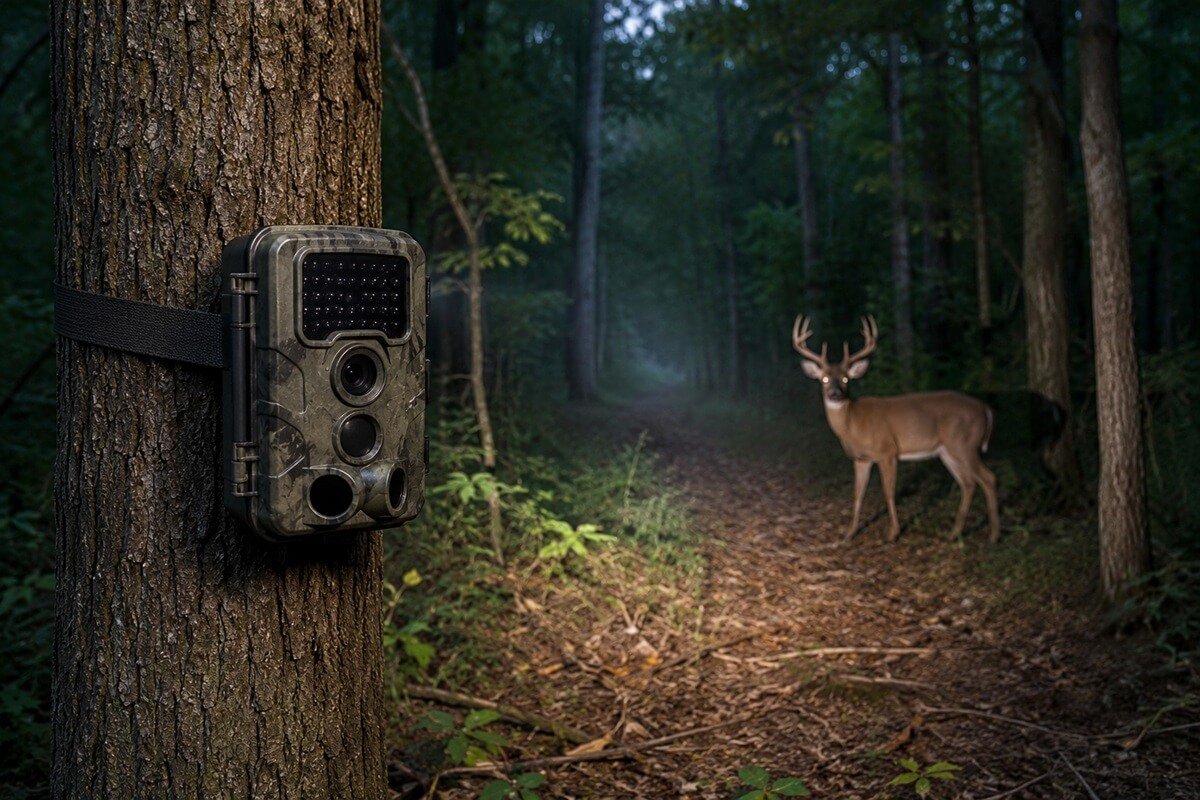
Experienced hunters understand the crucial importance of arming themselves with essential equipment to enhance their chances of success in the field. For instance, at nightfall, they should have a night vision monocular and a hunting flashlight. A night-vision trail camera gives you a major advantage in the field because it helps you track an animal’s movements long after daylight fades. By reviewing consistent nighttime activity patterns, you can plan smarter routes, better stand placement, and more accurate hunting strategies.
The technology has improved fast over the last few years, and the 2026 lineup now includes cameras with sharper infrared illumination, faster triggers, and cleaner low-light footage. This means you get reliable visibility in complete darkness and a clearer picture of what’s happening on your hunting ground.
In this article, we will explore the five best trail cameras with night vision available in 2026. These models differ mainly in nighttime image quality, trigger speed, detection range, battery requirements, weather resistance, and ease of setup. Whether you’re a wildlife enthusiast, a researcher, or simply someone interested in monitoring your property’s security, these trail cameras deliver exceptional performance even in low-light conditions.
Our Top Picks: Best Trail Cameras With Night Vision
Here are our top picks for different hunting and wildlife-monitoring needs. Use this quick comparison to narrow down the right trail camera before reading the detailed reviews below.
| PRODUCT | BEST FOR | NIGHT VISION | TRIGGER | DETECTION RANGE | KEY STRENGTH | PRICE |
|---|---|---|---|---|---|---|
DIGITNOW | Best Overall | IR | 0.3s | 80 ft | Wide-angle detection | Check price → |
Vikeri A1 | Budget Pick | IR | 0.2s | 80 ft | Affordable | Check price → |
Coolife | Best Value | IR | 0.2s | 82 ft | 3 PIR sensors | Check price → |
Bushnell Cellucore 20 | Compact Pick | IR | 0.5s | 80 ft | Compact design | Check price → |
Stealth Cam | Durable Pick | IR | 0.2s | 80 ft | Outdoor durability | Check price → |
How We Selected These Trail Cameras
We compared these night vision trail cameras based on the features that matter most for hunting and wildlife monitoring, including trigger speed, infrared range, image and video resolution, detection angle, weather resistance, battery requirements, storage, and ease of setup. We also considered how each model fits different hunting situations, from budget scouting to longer-term property monitoring.
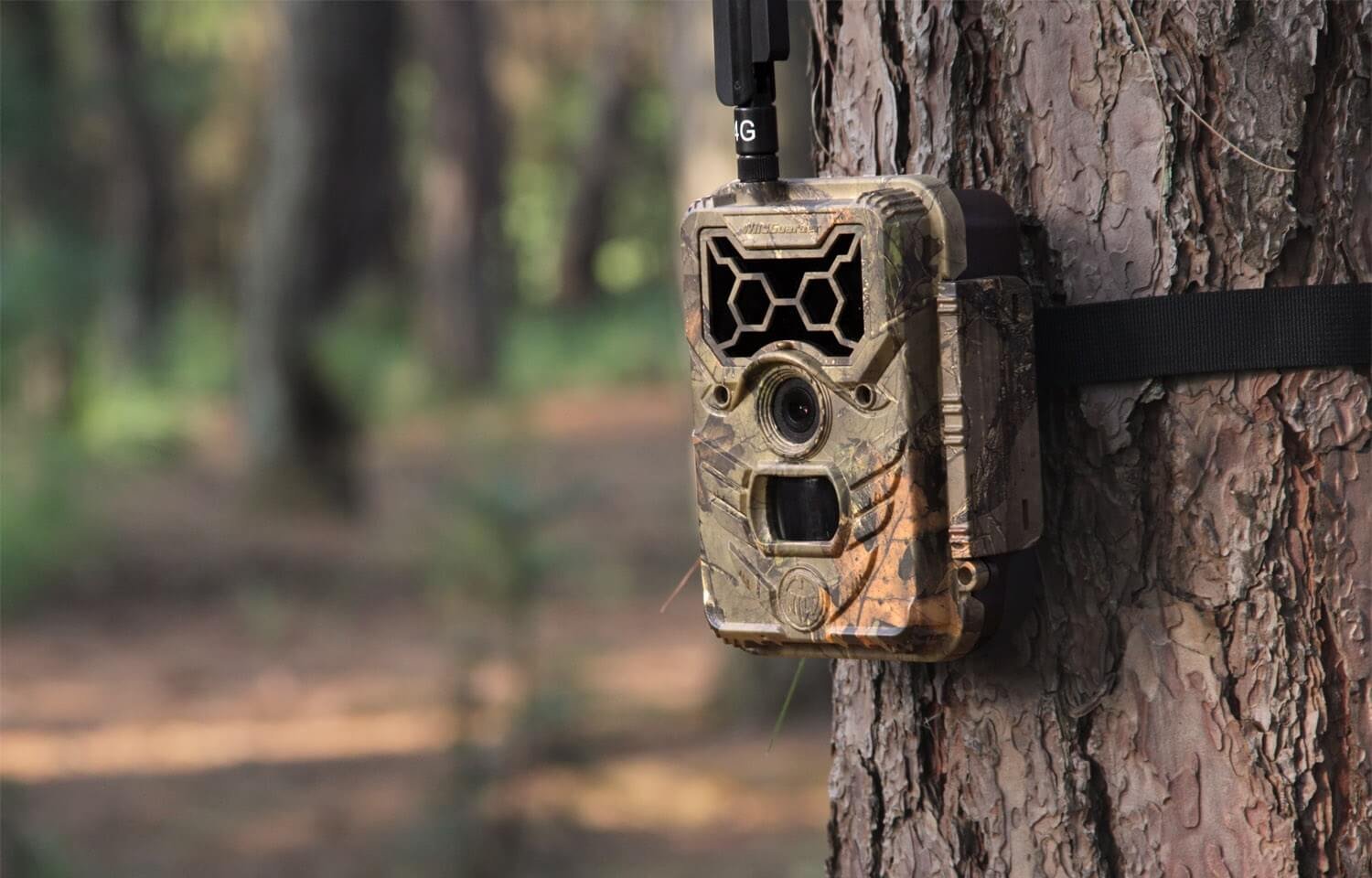
1. DIGITNOW 16MP Trail Camera with Wide Angle 120° Detection

For your favorite value-for-money night vision trail camera for hunting, look no further than DIGITNOW! With its 8 image sensors, this night vision camera is perfect for the most intense hunting activities. The device itself exudes durability with a robust and weighty build. Moreover, its weatherproof design adds an extra layer of reliability.
This DIGITNOW camera provides an excellent resolution of 16 MP and 1080P in HD quality to take images with total sharpness. It is equipped with 120° detecting range, which allows you to get excellent, broader views. And with IP65 waterproof level, it will record any animal movements you want even on rainy days.
Activate the multi-shot mode to ensure no details are lost amidst environmental movements. With a rapid trigger speed of 0.3 seconds, this night vision trail camera captures even the fastest prey with unparalleled precision.
This device is also equipped with an infrared LED that reaches about 20 meters in the dark. Plus, it never produces bright flashes for stealthy work and environment monitoring without disturbing the natural environment. However, you need a micro SD card, which is not included.
Pros:
- High sensitivity with 3 PIR sensor
- Excellent broader view
- Fast trigger speed
- Easy to operate
Cons:
- Needs a constant power source OR 8 AA batteries
2. Vikeri A1 Trail Camera with 120° Wide-Angle Motion
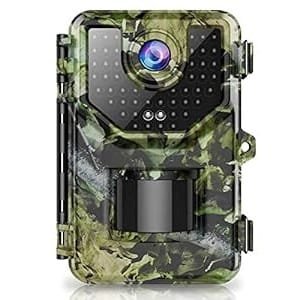
The Vikeri A1 is the Best Cheap Night Vision Camera that you can buy for less than 60 dollars. At an affordable price, this camera boasts an impressive 20MP resolution and a rapid shooting speed of 0.2 seconds. This model is designed to withstand all seasons, which allows you to capture the nuances of each of the four seasonal changes with exceptional clarity.
It is a very versatile device with night vision that can be used to take images of wildlife or as a surveillance camera. It has a video resolution on its 1520p screen, so you will see images and videos in high definition.
Its casing is made of a very resistant material, it also has an anti-humidity coating and protection against splashes. Therefore, you can use the device for a long time without losing its benefits. The setup is very intuitive for the most part, like a normal camera.
Vikeri A1 trail camera uses high-grade IP66 materials that are extremely durable, from seal to probe lens. It will protect the device from rain and dust, and work in tough environments like tropical rainforests or deserts. This device works with 4x Alkaline batteries (included in the package) that last up to 6 months.
Pros:
- IP66 waterproof
- Takes great photos & video
- Heavy-duty construction
- Easy to install
- Widely usable
Cons:
- Buttons aren’t well-positioned
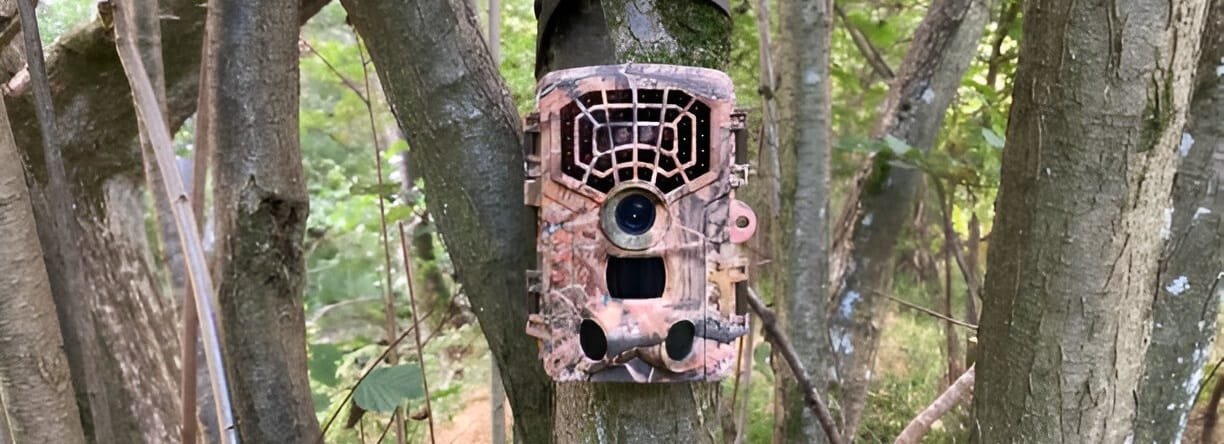
3. Coolife Game Wildlife Camera with 3 Infrared Sensors

If you’re looking for the best night vision trail cameras for hunting, the COOLIFE Game Wildlife could be a great option for you. It is a camera that can record videos and multi-shot images with low memory consumption so that you don’t lose any angle of vision.
It has 21 MP and is equipped with thermal sensitivity and IR technology through 46 LED lights. This helps to ensure that the images are of high quality, even if there is no type of lighting. Furthermore, if you’re seeking a camera with an impressive 0.2-second shooting capacity, this model is tailored to meet your needs. It offers bright flashes to keep prey calm and relaxed.
It has different functionalities, such as date and time adjustment, password protection, and temperature control, which serve to increase its comfort and precision. The operating temperature is -4 °F to 140 ° F (-20°C to 60°C).
With 3 PIR sensors, the COOLIFE night vision trail camera excels in capturing images or videos from a distance of up to 25 meters. And the 120-degree wide-angle lens offers a huge shooting scope so that you won’t miss any corner even at night. The included strap is approximately 70 inches long.
Pros:
- Super quality night vision
- Can record even in the rainy season
- Heavy-duty construction
- IP67 waterproof
- Good value for the money
Cons:
- Requires regular battery monitoring
- Included accessories are limited
4. Bushnell 119904V Cellucore 20 Trail Camera

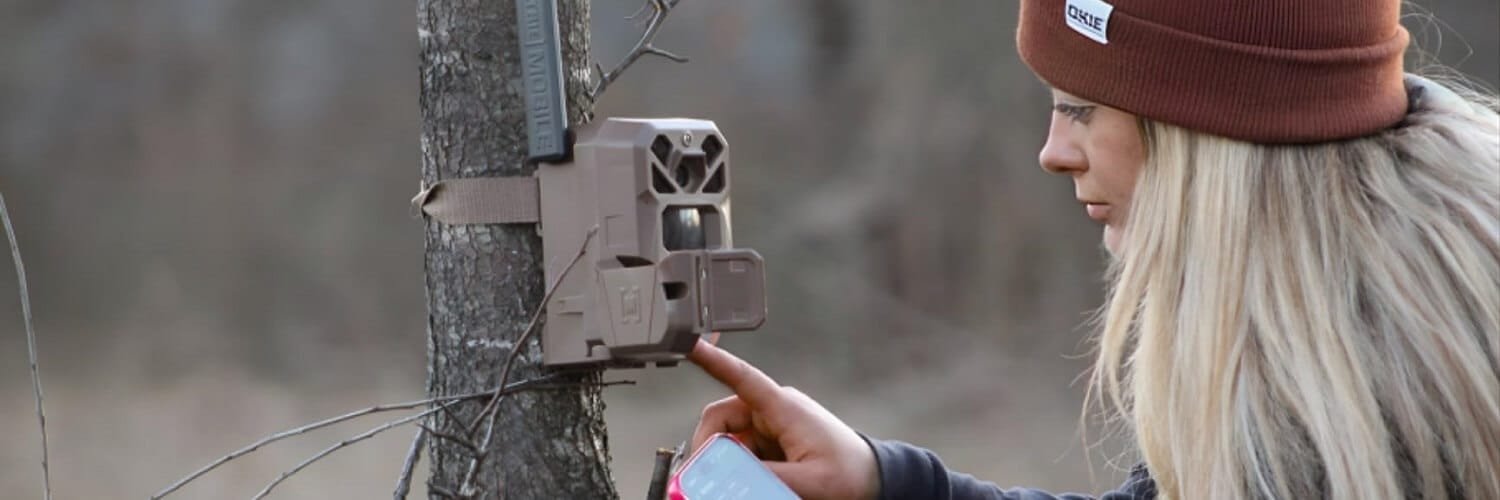
For those in search of a compact, small-sized, and high-quality night vision trail camera, the Bushnell Cellucore 20 stands out as the ideal choice. This trail cam combines a compact design with top-notch performance for both images and videos.
It comes with a 20 MP resolution to take pictures at night without emitting bright flashes. The package includes a high-quality strap; however, please note that batteries and an SD card are not included in the order.
This device has compatibility with 4G LTE, GPS, and a response speed of 0.5 seconds. These will allow you to capture all movement efficiently and quickly. However, the detection range is limited.
After basic setup, you’ll get clear day and night photos sent right to your devices. The battery also provides a long service life (up to 6 months). To ensure quality, Bushnell offers a 2-year warranty. This brand also offers an external solar panel that works with this device.
Pros:
- Good battery life
- Two-year limited warranty
- Convenient image sorting
- Easy set-up
- Affordable
Cons:
- Not as accurate in capture as others
5. Stealth Cam Trail Camera with Nighttime Range

Last but not least, this is the best durable and budget-friendly night vision trail camera for hunting. It will deliver high quality images both day and night. This camera is suitable for outdoor use and capable of handling various weather elements.
Stealth Cam trapping camera draws attention for its good adjustment of the shooting speed and for recording videos up to a distance of 80 feet.
It has high sensitivity to movement. In addition, it has a firing speed of 0.5 seconds, which you can program so that you do not lose sight of any moment of the action. You can adjust the various parameters, such as time, password, temperature, and date, to make the camera work according to your specific needs.
Capture images in stunning 1080P resolution, while the videos boast loud and clear sound on this trapping camera. It has anti-humidity protection, and its casing is robust so that it does not lose its benefits even if it works outdoors.
Pros:
- Extended nighttime range
- High quality views both day and night
- External LCD status display
- All these features come at a good price
Cons:
- 0.5 seconds PIR video trigger speed
Which Trail Camera with Night Vision to Buy in 2026?

If it is the first time that you are going to buy a night vision camera for hunting or if you want to change your old equipment, it is convenient that you review this purchase guide before making a final choice. Each criterion will allow you to take the camera that response to your particular plans.
Megapixels
The megapixels will define the resolution of the images. The higher the resolution, the sharper you will have the photos or videos. Some cameras have a resolution of 12 MP, which is enough to take clear photos. However, if you want professional-quality images, it is best to opt for cameras that have a resolution of 16 MP or higher.
Field of view
Trail cameras that have a wide-angle lens have a larger field of view. If you want to capture wide-field video or photos, you just need a device that has a good wide-angle lens. There are good trail cameras with good field of views on the market, and they are not necessarily that expensive.
Fire speed and resistance
Trail cameras that have good shutter speed can get photos in quick succession. This is ideal for detecting the most agile and fast prey. Some cameras shoot in 0.4 s, but the fastest models reach a trigger speed of 0.1 seconds. To withstand rain and humidity without problems, it must have IP66 or IP68 protection.
No-Glow vs. Low-Glow Infrared
Not all infrared night vision is equally discreet. No-glow IR uses infrared illumination that is designed to be virtually invisible to the human eye, making it a good choice when minimizing visible illumination around a camera is important. Low-glow IR may produce a faint red glow when the LEDs activate.
For cautious wildlife or hunting locations where keeping the camera less noticeable is a priority, no-glow models can be the better option.
Detection Range vs. Usable Image Range
Pay attention to the difference between a camera’s advertised detection range and its usable nighttime image range. A trail camera may detect movement from 80–100 feet away, but that does not necessarily mean the resulting nighttime photos will be equally clear or detailed at that distance.
Infrared illumination, subject size, weather, vegetation, and camera placement can all affect image quality. When comparing cameras, consider both the claimed detection distance and how effectively the camera can illuminate and capture subjects in real hunting conditions.
Battery Type and Operating Conditions
Battery life depends on more than the number printed on the product box. Cold temperatures, frequent triggers, nighttime infrared use, and video recording can all increase power consumption. Make sure to check the capacity for external memory cards. A higher capacity allows for more images and longer recording times.
If you’re placing a camera in the field for extended periods—especially during colder hunting seasons—check the recommended battery type and consider how often the camera is likely to trigger. A camera with efficient power management can reduce the need for frequent battery changes.
The cheapest cameras with night vision
Price plays a crucial role in informing you about different products. That’s why we’ve curated a selection of the most affordable options, ensuring you don’t waste time manually filtering by price. For daytime scouting and identifying animals at a distance, a good pair of hunting binoculars can also complement your trail camera setup.
FAQs: Best Trail Cameras With Night Vision
What is a night vision trail camera?
A night vision trail camera is a motion-activated camera designed to capture photos or videos after dark using infrared illumination. Unlike a standard camera that relies on visible light, an IR trail camera can record nighttime activity while keeping the scene illuminated primarily by infrared light. This makes it useful for monitoring wildlife, scouting hunting areas, and observing animal movement without needing a separate light source.
How far can a trail camera with night vision see at night?
The advertised detection or infrared range varies by camera and can extend from roughly 40 feet to more than 100 feet on some models. However, detection range is not the same as usable image range. A camera may detect movement at 80–100 feet without producing equally detailed nighttime images at that distance. IR illumination strength, weather, vegetation, subject size, and camera placement can all affect the quality of the captured image.
Is no-glow or low-glow better for hunting?
It depends on how discreet you need the camera to be. No-glow infrared is designed to produce virtually no visible illumination when the camera takes a nighttime photo, making it a good choice when minimizing visible light around the camera is important. Low-glow cameras can produce a faint red glow when the IR LEDs activate. For locations where keeping the camera as inconspicuous as possible is a priority, no-glow is generally the better option.
How fast should a trail camera trigger?
For hunting and wildlife monitoring, a faster trigger speed can help capture animals that move quickly through the detection zone. Models with trigger speeds around 0.2–0.3 seconds can be suitable for many applications, although trigger speed should not be considered by itself. Detection range, recovery time, detection angle, and placement also influence whether the camera captures the animal before it leaves the frame.
How long do trail camera batteries last?
Battery life varies considerably depending on the camera, battery type, temperature, trigger frequency, and recording settings. Cold temperatures, frequent motion triggers, nighttime infrared illumination, and video recording can all increase power consumption. If you plan to leave a camera in the field for weeks or months, check the manufacturer’s recommended battery type and consider a model with efficient power management or an external power option.
How do I set up a night vision trail camera for hunting?
Start by choosing a location with a clear view of the area you want to monitor. Mount the camera securely and angle it toward a trail, feeding area, watering location, or other area where animal movement is likely. Remove nearby branches or vegetation that could trigger the sensor or obstruct nighttime images. Before leaving, check the batteries, memory card, date and time settings, and motion sensor, then take a few test photos to confirm the camera is positioned correctly.
When setting up or checking your camera after dark, a reliable hunting headlamp can provide hands-free lighting while leaving both hands available for adjusting the camera, checking batteries, or securing the mounting strap.
What memory card should I use in a trail camera?
Use a memory card that is compatible with the specific trail camera and has enough capacity for your expected number of photos and videos. Higher-capacity cards can be useful when the camera will remain in the field for an extended period, but compatibility and reliability are more important than simply choosing the largest card available.
Do trail cameras work in complete darkness?
Yes. Trail cameras equipped with infrared illumination can capture images and video in darkness without relying on visible light. The quality of those nighttime images depends on factors such as the IR system, camera sensor, subject distance, weather, and positioning.
Should I use a trail camera with a wide field of view?
A wider field of view can be useful when animals may approach the camera from different directions or when monitoring a larger area. However, a wider angle can also make distant subjects appear smaller in the frame. Choose the field of view based on how close animals are likely to pass and what you want the camera to capture.
Are trail cameras with night vision waterproof?
Trail cameras are designed for outdoor use, but their weather resistance varies by model. Check the manufacturer’s stated weather-resistance rating before leaving a camera exposed to rain, snow, or prolonged humidity. Proper mounting can also help prevent water from entering the housing and protect the camera from unnecessary exposure.
Conclusion
Choosing the right trail camera with night vision involves a balance of key factors such as resolution, night vision capability, trigger speed, and durability. By following our recommendations, you can make informed decisions tailored to your hunting or surveillance requirements. Our comprehensive guide also simplifies the selection process and offers insights into essential features and considerations.
Related Trail Camera Guides
- The Complete Trail Camera Guide (2027)
- Best Solar Trail Cameras of 2026 (Field-Tested)
- Best Trail Camera Mounts (Tested & Ranked)
- Trail Camera Placements for Big Buck: 7 Best Spots
- Best Cheapest Trail Cameras Under $100
- Top 10 Best Trail Cameras Under $200