How to Clean Binoculars: A Step-by-Step Lens Care Guide

Keeping your binoculars clean is essential for maintaining clear, sharp views and protecting the delicate lens coatings that improve optical performance. However, using the wrong cleaning methods or materials can easily scratch the lenses or damage their protective coatings, reducing image quality over time.
In this guide, you’ll learn how to clean binoculars safely using the proper techniques and a few simple cleaning tools. We’ll cover the basic principles of binocular care, the essential items every binocular cleaning kit should include, and a step-by-step process for removing dust, fingerprints, smudges, and dirt without damaging your optics.
Whether you use binoculars for birdwatching, ethical hunting, hiking, or wildlife observation, these tips will help keep them in excellent condition for years to come.
How do you clean binoculars?
To clean binoculars safely, first remove dust with a blower or soft brush, then wipe the lenses with a microfiber cloth and lens cleaning solution. Avoid household cleaners, paper towels, or rubbing dusty lenses, as they can scratch the optical coatings.
Two Important Rules Before Cleaning Binoculars
To learn how to clean your binoculars without facing difficulty, you must follow these two principles…
Principle 1: Clean Only If Necessary
Cleaning the lenses, even with care, always involves the risk of scratches and wear of the ultra-thin coating layers that cover them. Binoculars and other optic instruments should therefore only be cleaned if necessary if the lenses are too dirty to allow proper use.
Principle 2: First Eliminate Dust and Particles
Certain dust, in particular, those of quartz which are very abundant in the environment (quartz is a basic component of many rocks; sand for example is largely composed of quartz) are harder than glass and cause scratches and wear when the lenses are rubbed without having eliminated them. Scratches on the objective lenses do not interfere with the use of binoculars or spotting scopes, but on the eyepieces, it is much more annoying.
How to Clean Binoculars Safely in 5 Simple Steps
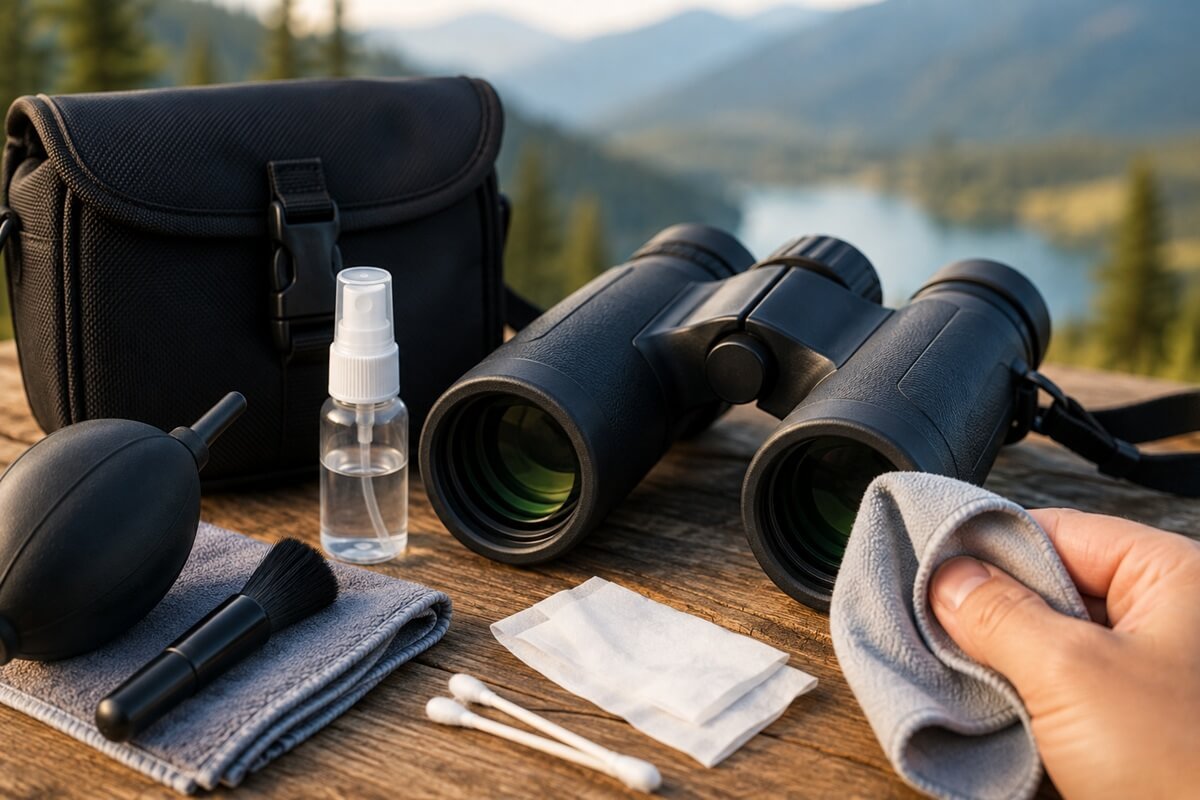
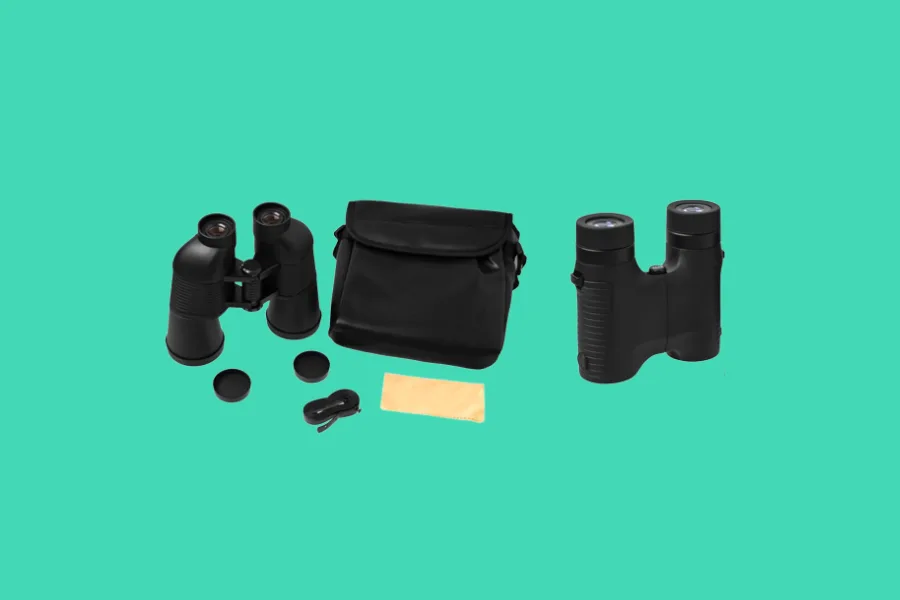
Before starting to clean binoculars, you must have cleaning accessories. The cleaning kit includes all the elements necessary for safe and effective cleaning (content and presentation may vary depending on availability). Before you begin cleaning your binoculars, it’s important to use the right tools. The table below compares common binocular cleaning supplies and shows which ones are safe to use on delicate optical lenses and which should be avoided.
| Cleaning Tool | Safe for Lenses | Best Use |
| Air blower (bellows) | ✅ Yes | Removes loose dust and sand without touching the lens |
| Soft lens brush | ✅ Yes | Removes stubborn dust particles |
| Microfiber cloth | ✅ Yes | Wipes away fingerprints and smudges |
| Lens cleaning solution | ✅ Yes | Removes grease and oily marks |
| Lens cleaning tissues | ✅ Yes | Single-use cleaning for delicate optics |
| Cotton swabs | ✅ Yes (with cleaner) | Cleans around lens edges |
| Paper towels | ❌ No | Can scratch lens coatings |
| Household glass cleaner | ❌ No | May damage protective coatings |
| Shirt sleeve or regular cloth | ❌ No | Can trap dirt and scratch lenses |
Common Binocular Cleaning Mistakes
Even with the right cleaning supplies, a few simple mistakes can shorten the lifespan of your binoculars or reduce image quality. Avoid these common errors to keep your optics in excellent condition.
- Wiping dusty lenses before removing debris can trap abrasive particles and scratch the lens surface.
- Using paper towels or facial tissues may leave fine scratches or lint on delicate optical coatings.
- Spraying cleaning solution directly onto the lenses can allow liquid to seep into the binocular housing.
- Using household glass cleaners or harsh chemicals may damage protective lens coatings and rubber components.
- Storing binoculars while they’re still damp can lead to moisture buildup, unpleasant odors, or fungal growth inside the optics.
Avoiding these mistakes will help preserve your binoculars’ clarity, performance, and durability for years of outdoor use.
Step 1: Clean the Binocular Body First

Start by cleaning the body of the instrument, the eyecups, etc… and eliminate as much dust and dirt as possible. You can do this with a damp cloth or a soft cloth dampened with a hint of household detergent. Avoid touching the lenses. Finish with plain water.
Step 2: Remove Dust and Debris from the Lenses
Thoroughly remove all dust from and around the eyepiece and objective lenses. For this, you can blow air with your mouth or, better, use special bellows for cleaning optical instruments. This approach is also recommended by Nikon, which advises removing loose dust with a blower before wiping the lenses to reduce the risk of scratches.
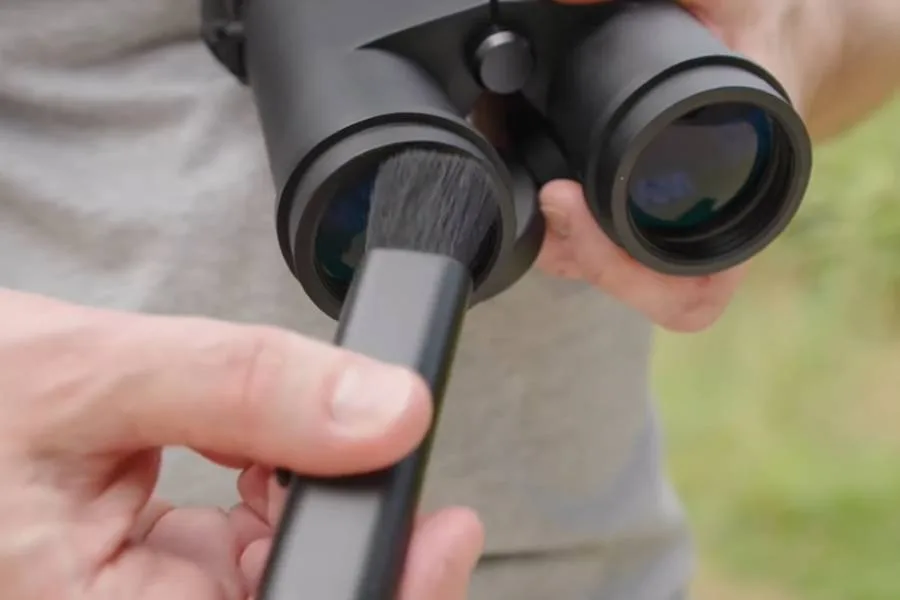
If some dust remains attached, use a soft brush that will unhook it, without ever rubbing. You will then eliminate them by blowing.
In the event of a disaster, if the binoculars have fallen in the sand for example, if they are covered in mud, touch them as little as possible at the level of the lenses.
If it is a waterproof model, do not hesitate to rinse them thoroughly by running them under the tap; all the particles must have disappeared before moving on to the next step. If it is a non-waterproof model or a non-tropicalized photo lens, let it dry well then blow until the particles are completely eliminated. Never rub.
Step 3: Wipe the Lenses Gently
If there are no greasy traces on the lenses, a light mist deposited with the mouth, followed by the use of a special non-abrasive dry wipe for optical cleaning, will effectively clean them. If you don’t have a wipe, all you have to do is use your handkerchief, making sure it’s dust-free.
Beware of paper tissues or household papers which contain potentially abrasive fillers for the lenses and their coating layers, or which can deposit lint. If it’s hot, your breath won’t condense on the lenses, so you’ll need to use a cleaner, as described in step 4.
Step 4: Remove Stubborn Smudges and Grease
If there are greasy traces that cannot be easily removed, use a mild cleaning product in small quantities, never a solvent. ZEISS also recommends using a dedicated lens cleaning solution with a clean microfiber cloth instead of household cleaners, which may damage optical coatings. Optical instrument cleaning kits always contain it. Place a very light jet on a wipe and rub without pressing until the traces disappear.
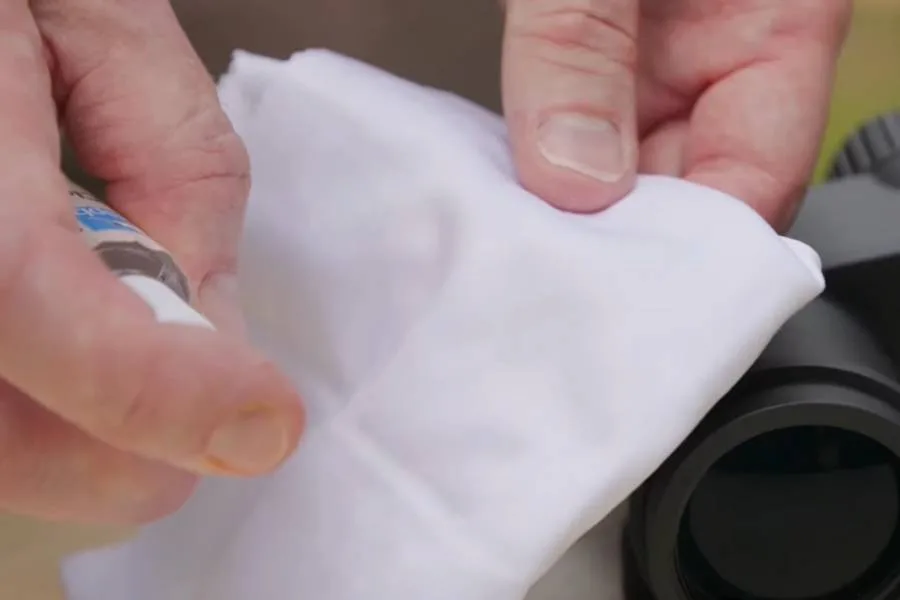
Do not spray directly on the lenses: the amount of liquid would be excessive. To remove streaks from the edge of the lenses, use cotton-tipped cleaning sticks lightly sprayed with cleaner. You can then finish steaming.
Step 5: Finish with a Final Lens Inspection
Comes the finish. With a special antistatic cloth for optical cleaning and checking that dust has not reappeared on the lenses, finish the job. Lastly, only use special cloth. Because if it were to be loaded with grease, it would redeposit it the next time you clean it and would therefore be good for the trash.
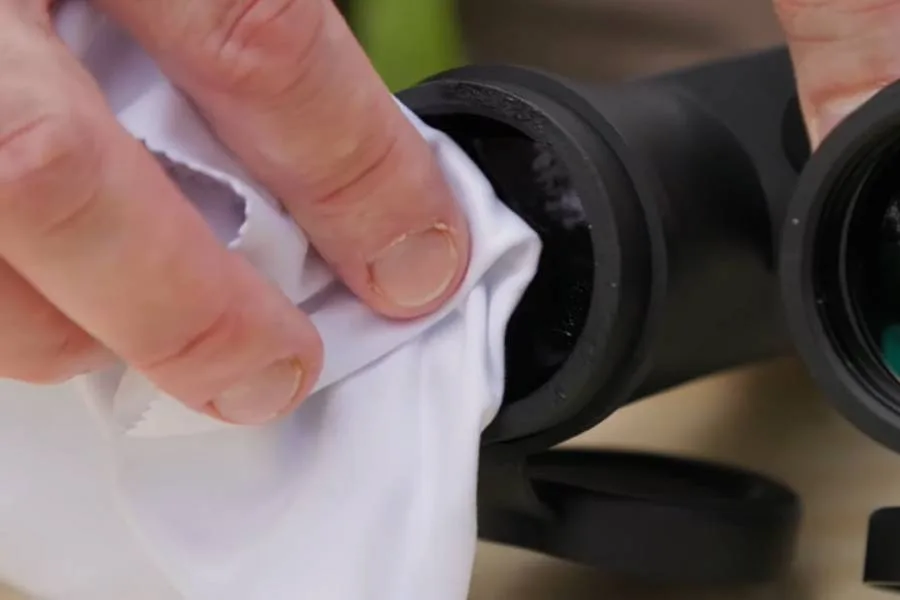
It is better to start cleaning with a disposable wipe and finish it with a special cloth that is reusable. This linen must be kept away from dirt and dust.
Let’s see the complete video on how to clean the lenses of your binoculars…
Binocular Cleaning Kit Checklist
Before cleaning your binoculars, make sure you have the right tools on hand. Using proper optical cleaning supplies helps protect the lenses and their coatings from unnecessary damage.
- ✓ Air blower (bellows) to remove loose dust and debris
- ✓ Soft lens brush for stubborn particles
- ✓ Microfiber cloth for streak-free lens cleaning
- ✓ Lens cleaning solution designed for optical lenses
- ✓ Lens cleaning tissues for disposable, lint-free cleaning
- ✓ Cotton swabs for cleaning around lens edges and eyecups
- ✓ Protective carrying case to keep binoculars clean during storage
Having a dedicated binocular cleaning kit makes routine maintenance quicker, safer, and more effective while extending the life of your optics.
FAQs: Binoculars Cleaning Tips
How to clean smudges and fingerprints from binocular lenses?
Dampen a lens cleaning tissue or a microfiber cloth with a small amount of lens cleaning solution. Gently wipe the lens surface in a circular motion, starting from the center and moving towards the edges. Avoid applying excessive pressure.
Can I use water to clean my binocular lenses?
Using water alone is generally not recommended, as it may contain impurities that can harm lens coatings. If water is necessary, use distilled water and apply it sparingly. Always follow up with a proper lens cleaning solution for the best results.
Is it safe to disassemble my binoculars for cleaning?
Disassembling binoculars is not recommended for routine cleaning. If you have concerns about internal dust or dirt, it’s advisable to consult the manufacturer or a professional service for proper maintenance.
How often should I clean my binoculars?
The frequency of cleaning depends on usage and environmental conditions. Regularly inspect your binoculars and clean the lenses whenever you notice dirt or smudges. For heavy use in challenging conditions, more frequent cleaning may be necessary.
Can I store my binoculars with lens caps on to prevent dust accumulation?
Yes, using lens caps when storing your binoculars can help prevent dust and debris from settling on the lenses. However, it’s still essential to clean the lenses regularly to maintain optimal clarity.
What should I do if my binoculars get wet?
If your binoculars get wet, dry them immediately using a soft, absorbent cloth. Ensure that no moisture remains on the lenses and allow the binoculars to air dry completely before storing them in a protective case.
Can I use alcohol to clean binocular lenses?
Isopropyl alcohol can be safe in small amounts, but it’s best to use a lens cleaning solution specifically designed for optical equipment. Avoid products with harsh chemicals, as they may damage protective lens coatings.
Can I use eyeglass cleaner on binoculars?
Only if the eyeglass cleaner is labeled as safe for coated optical lenses. Some eyeglass cleaners contain ingredients that may not be suitable for binocular lens coatings, so a dedicated lens cleaning solution is the safer choice.
What’s the best microfiber cloth for cleaning binoculars?
Use a high-quality, lint-free microfiber cloth made for camera lenses, binoculars, or other optical equipment. Avoid household cleaning cloths, which may trap dirt or leave fine scratches.
Should I clean binocular lenses after every use?
No. Clean your binocular lenses only when dirt, fingerprints, or smudges begin affecting image quality. Unnecessary cleaning increases the risk of wearing down delicate lens coatings over time.
Can scratched binocular lenses be repaired?
Minor surface marks usually don’t affect performance, but deep scratches or damaged coatings often require professional repair or lens replacement. Attempting to polish scratches yourself may cause further damage.
Conclusion
There is nothing more stressful or disappointing than noticing after cleaning the optics of your pair of binoculars, that the lenses have been scratched or degraded, especially if these models are expensive. Now you know how to maintain your pair of binoculars. Even if your binoculars are waterproof, remember to spray them regularly with fresh water to remove sea salt and other materials that are harmful to the longevity of your binoculars (especially the rubbers of the eye cups!).