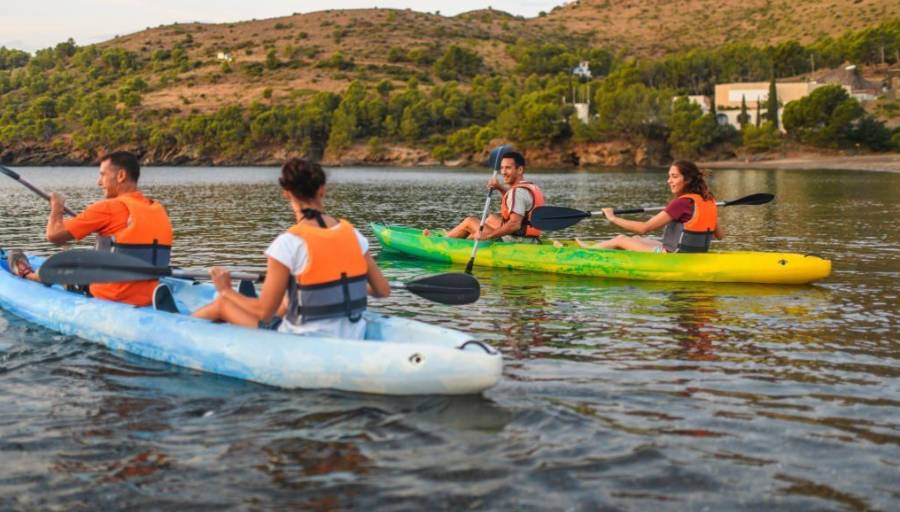
What’s the difference between canoeing and kayaking?

Have you ever wondered what the difference between canoeing and kayaking is? If the answer is yes, continue reading this article, which illustrates all the differences between these two types of boats.
Many people don’t make a difference between canoeing and kayaking and that’s fine. We too, sometimes use these words somewhat interchangeably. But when you have to choose a boat often, confusing canoe and kayak can play tricks on you. At first glance, kayaks and canoes may seem very similar, but if you look closely at these two types of watercraft, you will notice 5 differences.
Quick Answer
The biggest difference between a canoe and a kayak is the seating position, paddle design, and boat construction. Canoes have an open deck and use a single-bladed paddle, on the other hand, kayaks usually have a closed cockpit and use a double-bladed paddle. Kayaks are generally faster and more efficient, whereas canoes offer more carrying capacity and are easier for family trips and gear-heavy adventures.
- Best for beginners: Recreational kayak
- Best for camping trips: Canoe
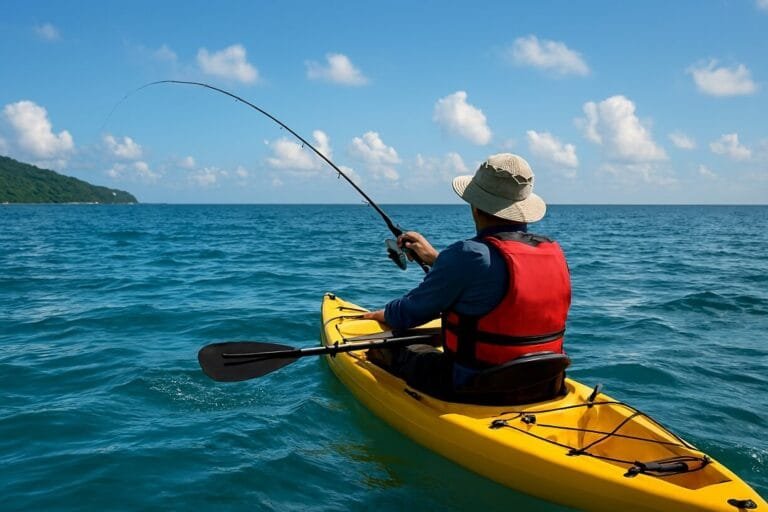
- Best for fishing: Either, depending on the water conditions and amount of gear you carry.
Canoe vs Kayak: Quick Comparison
If you’re short on time, this comparison highlights the key differences between a canoe and a kayak. Although both are excellent paddle sports, they differ in design, paddling technique, speed, stability, and the types of adventures they’re best suited for.
| Feature | Canoe | Kayak |
|---|---|---|
| Deck | Open | Usually closed cockpit |
| Paddle | Single-bladed | Double-bladed |
| Seating Position | Bench or kneeling | Low seat with legs extended |
| Speed | Moderate | Faster |
| Stability | More initial stability | Better secondary stability |
| Capacity | Carries more gear | Less storage, depending on model |
| Best For | Camping, families, fishing | Touring, recreation, fitness |
| Beginner Friendly | Yes | Yes |
Canoe vs Kayak: Boat Design Differences
Not all boats are the same: a transatlantic liner is not a raft, and a dinghy is not a speedboat. This also applies to canoes and kayaks.

The canoe has a pointed bow and stern and usually has the deck open. You don’t have to wear the classic kayaker’s “skirt”. Of course, the open deck has its pros and cons. If paddling a canoe is more comfortable, especially on a hot summer day, beginners will easily embark on the water.
The kayak has a different structure. It has a closed deck, and only the bow is pointed. Kayak anglers should therefore wear a skirt. Let’s say it would be because there are also kayakers who prefer not to wear protective skirts. It is possible to tackle the water with a kayak, but it is much more difficult. Because the kayaker sits in a cockpit, which is much narrower than the interior of a canoe.
The Shape of the Blades
Kayak paddles have double blades, generally curved. Paddles used for canoeing have a single flat blade. The second difference between canoeing and kayaking is here. But the difference is not minimal. The best way to understand how double or single paddles can make a difference in paddling is to try both kayaking and canoeing.

Although the posture inside the canoe and the kayak may seem similar, in reality, the movement to be made to paddle is completely different. Also, one of the first exercises for kayak learners is to roll over and bring the kayak to the surface with a single, very vigorous paddle. This is also possible with canoeing, but it’s a different dynamic.
You have just discovered a second difference between canoeing and kayaking. So if you find someone offering you kayaks with a single-blade paddle, you know they are offering you a type of paddle that’s not suitable for the boat you have chosen.
The Weight of the Boat
The kayak is lighter than the canoe, thanks in particular to the thinner line. Let’s say in principle because different kayak models can achieve different weights. The situation becomes more complicated if we compare inflatable kayaks with rigid kayaks and rigid canoes.

Canoes are heavier. The difference in weight is evident in the way these two types of boats float. A good kayak always floats at the water level. The wider and heavier canoe generally sinks a bit more. If you live by a river where in the morning you usually see kayakers or canoeists practicing in all seasons and all weathers, you can easily see the difference in buoyancy.
Which Is Faster: Canoe or Kayak?
In the water, the same rules do not apply as on land, except for one: lightness means speed. Kayaks are boats that can be used on the water designed to be faster than canoes. Thanks to their conical structure and light hull.

The canoe is a boat designed for more stable navigation. In reality, these two types of boats are not designed for sports competitions, but for moving on waterways and for fishing. The competitive use of kayaks and canoes is fairly recent.
Then – we add – a lot depends on the level of fitness and technique of those who practice kayaking or canoeing. A good kayaker can reach good speeds even in a canoe, and vice versa compared to a beginner or those who use the kayak for fun rather than competition.
“If you’re planning to paddle fast-moving rivers or rapids, choosing the right whitewater kayak is just as important as developing good paddling skills. For anglers planning to fish beyond sheltered waters, ocean-ready kayaks offer improved tracking, stability, and storage. Check out our recommendations for the best fishing kayaks for ocean use before heading offshore.”
Seating Position and Paddling Style
We’ve left this difference between canoeing and kayaking for last as it’s the best-known and most cited. The different form of canoeing and kayaking requires two very different types of sessions.
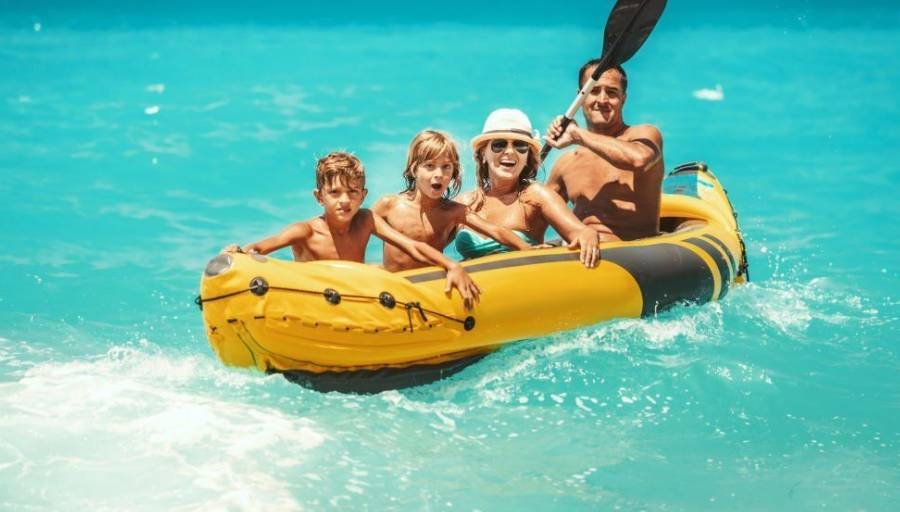
Canoe users can kneel on the hull or even paddle in a semi-kneeling position, as well as in a seated position with their legs slightly bent. This type of seat is not suitable for kayaking, mainly due to the much narrower hull. The only possible position in a kayak is to be seated with the legs stretched forward.
Who Should Choose a Canoe or a Kayak?
Now that you understand the main differences between a canoe and a kayak, the next step is deciding which one best fits your paddling style, experience, and the type of adventures you enjoy.
Choose a canoe if you:
- Paddle with family or friends
- Carry camping or fishing gear
- Prefer maximum stability
- Enjoy relaxed trips on lakes and calm rivers
Choose a kayak if you:
- Want better speed and efficiency
- Usually paddle solo
- Plan longer trips or fitness paddling
- Prefer exploring lakes, rivers, or coastal waters
If overnight adventures are on your bucket list, take a look at the best kayaks for camping, featuring models with enough storage for tents, sleeping bags, and other essential gear.
Did you know?
According to outdoor recreation participation reports, paddlesports continue to attract millions of participants each year, with kayaking consistently ranking among the most popular water activities due to its accessibility and versatility.
Frequently Asked Questions
Can you use a canoe and a kayak on the same waterways?
Yes. Canoes and kayaks can both be used on lakes, slow-moving rivers, reservoirs, and many coastal waters. However, the ideal choice depends on the water conditions. Kayaks generally perform better in windy conditions and rougher water, on the other hand canoes are preferred for calm lakes and gentle rivers where carrying extra gear is a priority.
Which is better for multi-day camping trips?
A canoe is usually the better option for overnight or multi-day adventures because it offers significantly more room for camping equipment, food, and supplies. If you’re planning to paddle with a partner or transport bulky gear, the extra storage capacity can make the trip more comfortable. Lightweight backpacking setups, however, can also work well in larger touring kayaks.
Do you need a life jacket for canoeing and kayaking?
Yes. Wearing a properly fitted personal flotation device (PFD) is recommended whenever you’re on the water, regardless of your experience level. Weather conditions, cold water, and unexpected capsizes can affect even experienced paddlers. In many locations, carrying or wearing a PFD is also required by local boating regulations.
Can beginners learn canoeing and kayaking without lessons?
Many people successfully learn the basics on calm water through practice and quality instructional resources. However, taking a beginner lesson or joining a guided outing can help you develop proper paddling techniques, improve safety, and build confidence much faster—especially if you plan to paddle rivers or coastal waters.
Which is easier to transport on a vehicle?
Transporting either boat is possible with roof racks or trailers, but the easiest option depends on the model rather than whether it’s a canoe or kayak. Recreational kayaks are often shorter and lighter, making them easier for one person to load. Larger canoes may require two people, although inflatable models of both types simplify transportation and storage.
Are inflatable canoes and kayaks worth buying?
Modern inflatable canoes and kayaks have improved significantly in durability and performance. They’re an excellent choice for paddlers with limited storage space or those who travel frequently. While they may not match the performance of high-end rigid boats, many quality inflatable models are more than capable of recreational paddling, fishing, and family outings.
Conclusion
If you enjoy speed, efficiency, and solo adventures, a kayak is often the better choice. If you prefer carrying extra gear, paddling with friends, or taking relaxed trips on calm water, a canoe is hard to beat. Ultimately, neither boat is universally better—it depends on where you paddle, how much gear you carry, and the experience you’re looking for.