How to Stay Hidden While Hunting: 5 Expert Concealment Tips

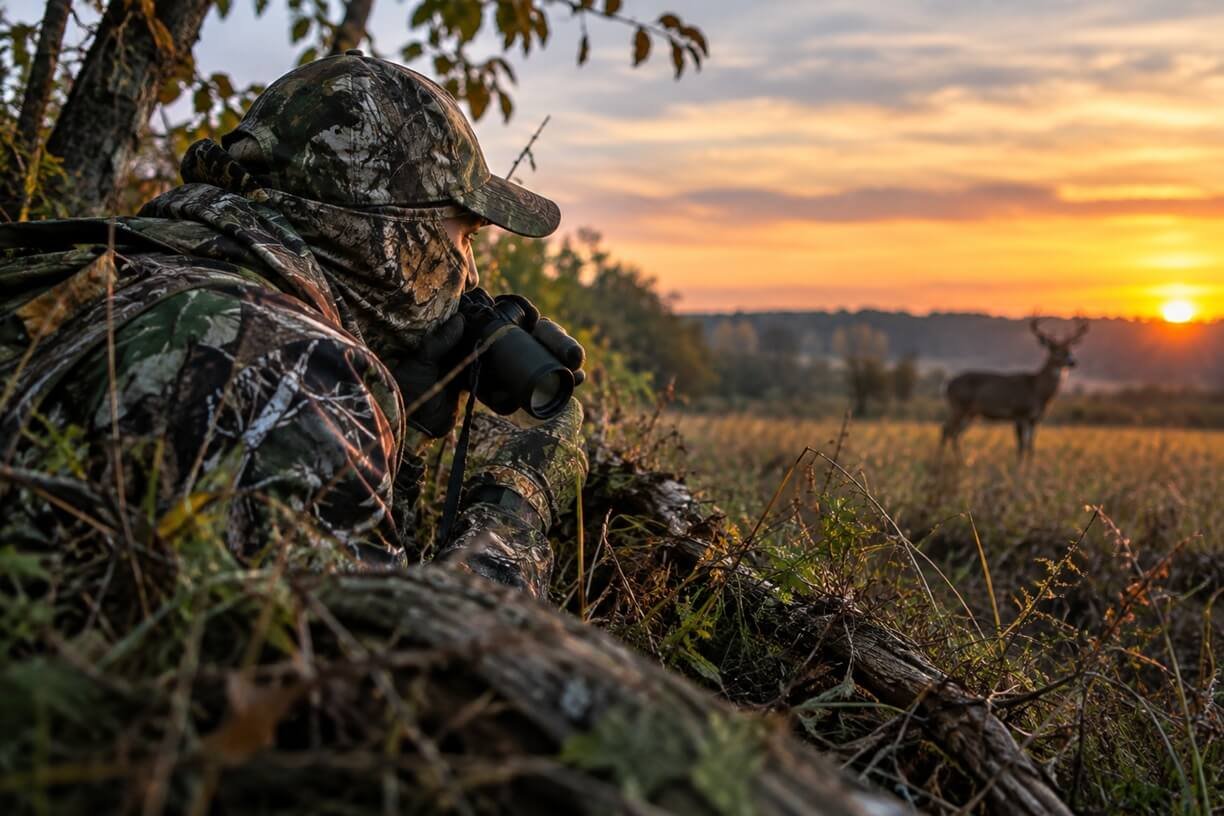
Staying hidden while hunting is about much more than wearing camouflage. In the field, animals can detect a hunter through movement, human scent, unnatural shapes, exposed skin, noise, and poor positioning—even when the hunter appears well camouflaged.
The most effective approach is to think about concealment as a complete system. Your clothing should blend with the terrain, but your position should also provide natural cover, your movement should remain controlled, and the wind should carry your scent away from areas where you expect game to approach.
Field-tested principle: The biggest concealment mistakes are often simple ones. Standing too early, moving unnecessarily, allowing exposed skin to remain visible, creating a strong silhouette against the sky, or ignoring a changing wind can reveal your position despite otherwise good camouflage.
In this guide, we’ll explain how to stay hidden while hunting and show you how to improve concealment step by step. You’ll learn how to choose and position a hunting blind, break up your silhouette, control movement and noise, manage scent, use wind direction, and adapt your setup to different types of game.
We’ll also cover the differences between concealment and camouflage, common mistakes that give hunters away, species-specific considerations for deer, turkey, waterfowl, pigeons and doves, and important hunting-safety practices.
The goal isn’t simply to disappear into the landscape. It’s to create a setup that looks natural, limits the senses animals can use to detect you, and allows you to hunt responsibly while following applicable local regulations.
In this guide, you’ll learn proven hunting concealment techniques, including how to choose the right location, build an effective hunting blind, control your scent, minimize movement and noise, use wind direction to your advantage, and avoid the common mistakes that alert game. These practical tips can help you remain undetected in a variety of hunting environments and seasons.
Why Animals Detect Hunters So Easily
Many hunters assume that camouflage alone keeps them hidden, but wild animals rely on several highly developed senses to detect danger. Depending on the species, they can notice movement, pick up human scent from hundreds of yards away, or hear subtle noises that people barely notice.
Birds such as pigeons, crows, and ducks have exceptional eyesight and quickly recognize unusual movement or unnatural shapes. Big game animals like deer and elk depend more heavily on their noses, while turkeys combine outstanding vision with sharp hearing.
Wildlife agencies and hunter education programs consistently emphasize understanding an animal’s senses and behavior as a key part of ethical and effective hunting. Learning how different species use sight, smell, and hearing can help hunters make better decisions in the field while minimizing unnecessary disturbance to wildlife.
How Different Animals Detect Hunters
Every game animal relies on different senses to identify danger. Understanding these differences helps hunters choose the right concealment strategy.
| Animal | Primary Detection Method | Best Concealment Strategy |
|---|---|---|
| Whitetail Deer | Smell | Control scent and hunt with favorable wind. |
| Turkey | Vision | Remain completely motionless and cover exposed skin. |
| Ducks | Vision | Blend the blind into surrounding vegetation. |
| Pigeons & Doves | Movement | Stay seated and avoid unnecessary motion. |
| Coyotes | Smell and Hearing | Control scent and keep noise to a minimum. |
Different game species rely on different senses to survive. Deer primarily detects danger through smell; on the other hand, many birds depend on exceptional eyesight and motion detection. Understanding these natural behaviors helps hunters adapt their concealment strategies to each species rather than using the same approach for every hunt.
Concealment vs. Camouflage: What’s the Difference?
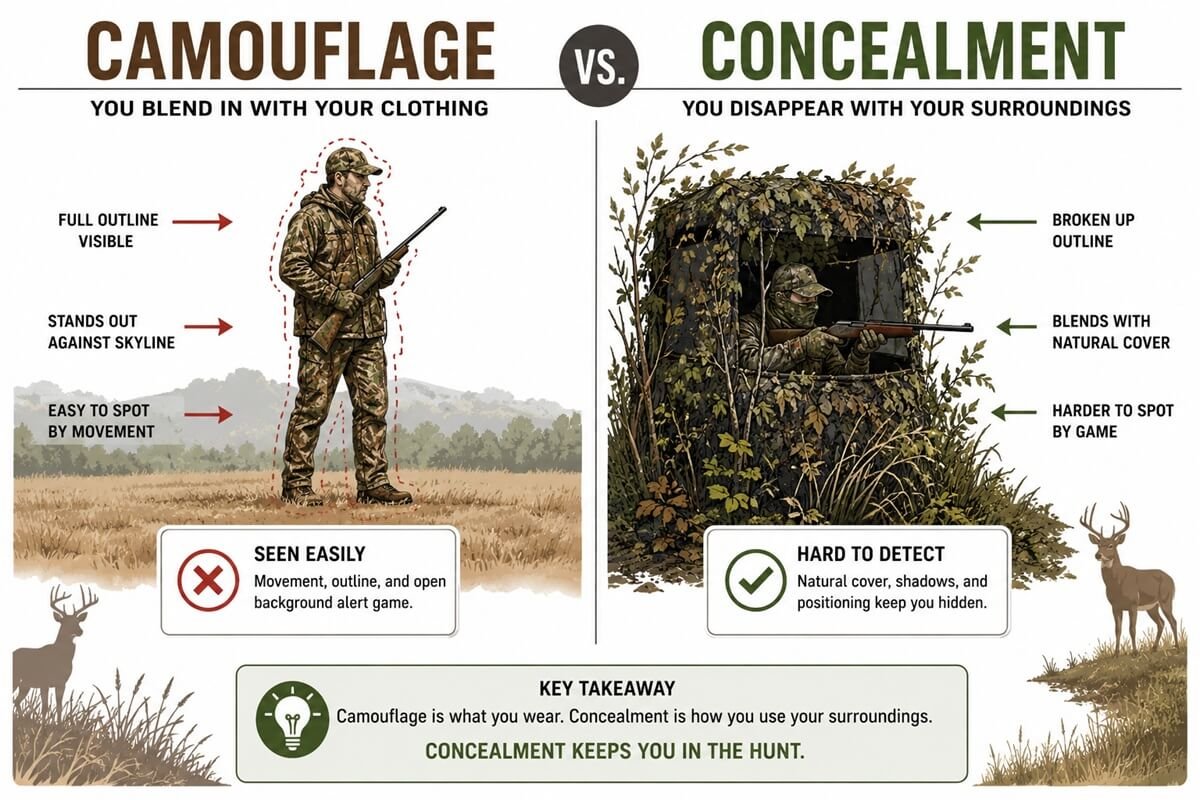
Many new hunters use the terms “camouflage” and “concealment” interchangeably, but they are not the same. Camouflage refers to clothing, face coverings, and equipment designed to blend into the environment. Concealment is the overall strategy of preventing animals from detecting your presence by controlling movement, scent, sound, and positioning.
Even the best camouflage pattern won’t help if you’re silhouetted against the skyline, moving constantly, or allowing your scent to drift toward approaching game. Successful hunters combine both camouflage and concealment for maximum effectiveness.
How to Stay Hidden While Hunting (Step by Step)
Follow these proven concealment strategies to reduce the chances of being detected by game animals. Although some techniques apply to all types of hunting, others are especially important when hunting birds, deer, turkey, or other species with highly developed senses.
1. Choose a Blind That Is Not Visible
Whether hunting on the edge of the woods or in the middle of a field, your hunting blind must always blend in with its environment. When hunting birds accustomed to your territory,. A conspicuous blind placed in an otherwise open area can quickly alert birds to something unusual in their surroundings.
To make a hunting blind less noticeable to birds, consider the following:
- Choose the location carefully: Place the blind in shade or natural cover when possible. In open terrain, use a smaller, lower-profile setup that creates less contrast with the surroundings.
- Match the camouflage to the surroundings: Choose netting that matches the vegetation and terrain around your hunting location. A color that works in dry grass may stand out in green woodland.
- Keep the profile low: Use a blind that provides enough room to hunt comfortably without creating an unnecessarily large or tall silhouette. When hunting from a seated position, keep the blind material around cap height where practical.
- Use natural vegetation: Where permitted, add suitable natural vegetation around the blind to break up its outline and help it blend into the surrounding environment.
- Set up the blind early: When practical and permitted, setting up ahead of the hunt can give wildlife time to become accustomed to the structure rather than encountering it for the first time when you’re already hunting.
2. Avoid Remaining Standing
A mistake made by many hunters of migrants when they hunt on the lookout: they remain permanently upright. As we explain above, your hunting blind must be made and adapted to offer visibility when you are seated. Standing up, when you spot an approaching bird, it means it has seen you too.
For better comfort and greater success in a hunting blind, be sure to use a seat. Sit down with your camouflage net positioned at cap height.
3. Avoid Excessive Movement
Sudden or unnecessary movement can attract the attention of approaching birds. Sensing a threat, he will immediately flee. You can reduce the chances of being detected by keeping movements slow, deliberate, and limited to the moments when they are necessary. If you use a net that is not sufficiently opaque, you just need to add a second net camouflage over it.
Another trick is to deliberately add movement to your rig in order to focus the birds’ attention on it and not on your stalk. In all cases, avoid sudden movements and untimely movements.
Understand the Human Silhouette
Wild animals may not recognize specific colors or camouflage patterns, but they quickly identify unnatural shapes. The human outline—especially the head, shoulders, and upright posture—is one of the easiest forms for game animals to recognize.
Break up your silhouette by sitting against trees, brush piles, tall grass, or natural vegetation. When possible, avoid standing on ridges, open field edges, or hilltops where your outline contrasts sharply against the sky.
Adding natural branches and vegetation around your blind further helps disrupt your shape and makes your position appear more natural.
4. Avoid Reflective Surfaces
A point often overlooked by many migratory hunters…
Birds are particularly sensitive to shiny objects that are not a sign of safety for them. To avoid shining, position your hide with the sun behind you. Keep reflective equipment out of direct sunlight whenever possible. Avoid unnecessary movement with firearms or other equipment when birds are approaching, and always handle firearms according to safe hunting practices.
Exposed skin can create a noticeable contrast against the surrounding vegetation, particularly for birds with strong visual acuity. Wearing a hat, cap or balaclava will darken your face. Gloves can also be useful in some cases.
5. Don’t Make Too Much Noise!
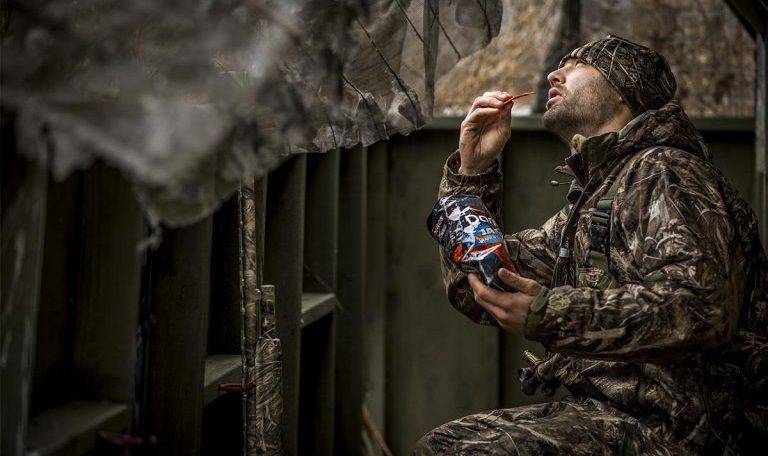
Conversations may be part of a social hunt, but unnecessary loud talking can alert nearby game. Keep your voice low when animals are approaching and avoid making noise that could reveal your position.
Unfortunately, birds are also sensitive to noise. It is of course not forbidden to talk and exchange in a blind, but it is also useless to shout and speak loudly. If you have to yell so your post neighbor can’t hear you, reduce the size of your lookout.
Pay Attention to Wind Direction
For many big game species, wind direction is even more important than camouflage. Deer, elk, wild hogs, and many predators rely heavily on their sense of smell to identify danger.
Before setting up your hunting location, check the wind using lightweight powder, milkweed seeds, or portable wind indicators. Whenever possible, position yourself so the wind carries your scent away from expected animal travel routes.
Bird hunting is generally less dependent on scent than deer hunting, but favorable wind direction still helps maintain a natural hunting setup and improves decoy presentation.
Practice Effective Scent Control
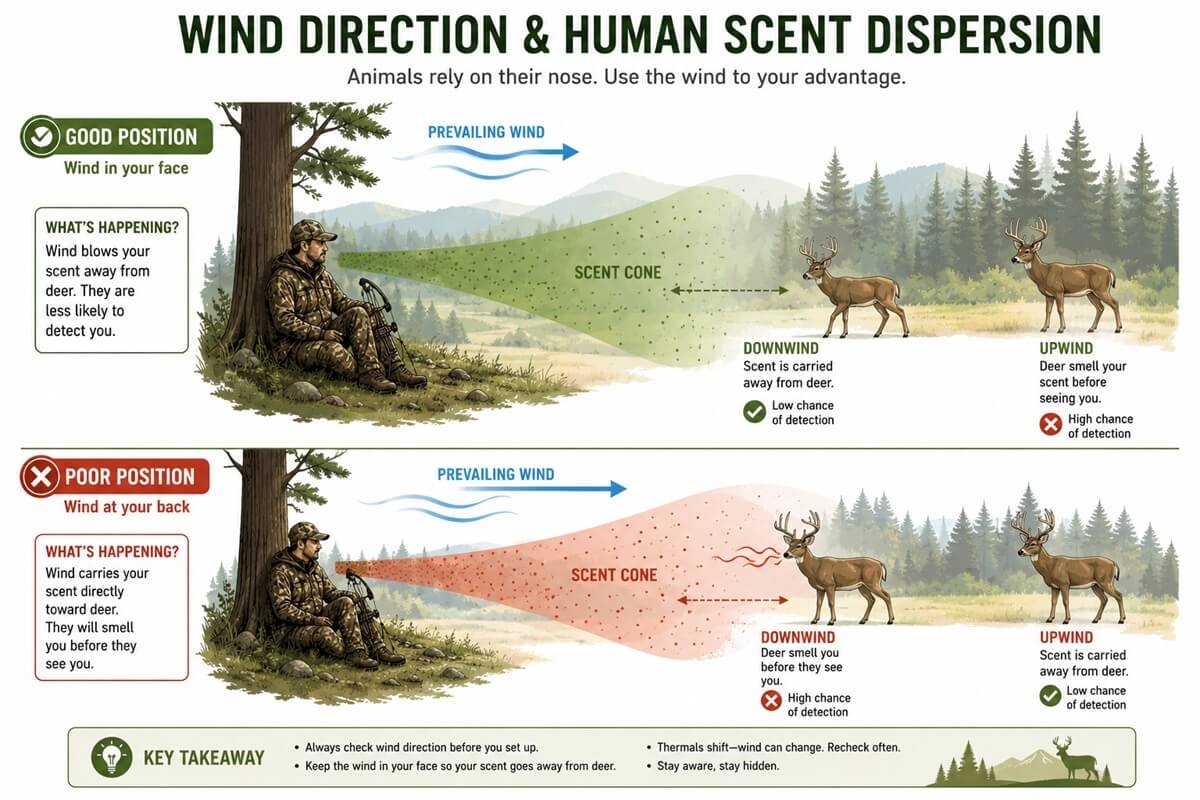
Although birds rely primarily on eyesight, mammals often detect hunters through scent long before they become visible. Reducing human odor can improve your chances of remaining undetected.
Wash hunting clothing with scent-free detergent, avoid strong fragrances, and store gear in sealed containers away from household odors. Wearing clean boots and minimizing contact with fuel, food, or cigarette smoke can also reduce unwanted scents. Although no scent-control product completely eliminates human odor, combining good scent management with proper wind direction provides the best results.
Maintain Sound Discipline
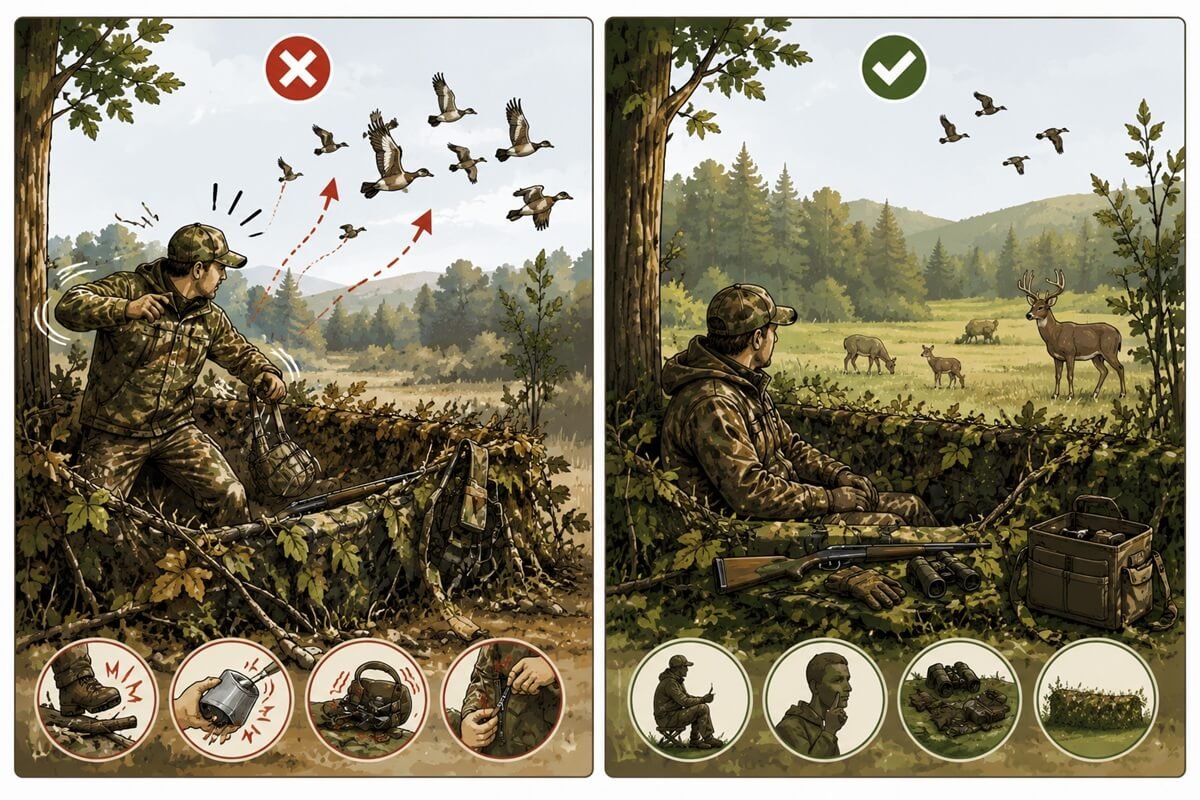
Noise travels surprisingly far in quiet hunting environments, especially during calm mornings. Metal equipment clanking together, loud conversations, zipper noise, or accidentally stepping on dry branches can alert nearby animals before you ever see them.
Organize your gear before legal shooting time, secure loose equipment, silence electronic devices, and communicate quietly when hunting with partners. Small adjustments can make a significant difference during close encounters.
Conclusion
Effective concealment combines camouflage, positioning, movement control, scent management, and awareness of wind and terrain. However, safety rules are ESSENTIAL. Even if your weapon is not new to you, a visit to the stand will allow you to check that your riflescope is correctly adjusted. Repeating the instructions won’t hurt.
Concealment Tips for Different Types of Hunting
Different game species require different concealment strategies.
- Deer Hunting: Focus primarily on scent control and favorable wind direction while minimizing movement.
- Turkey Hunting: Stay completely still and keep your face and hands covered, as turkeys have exceptional eyesight.
- Waterfowl Hunting: Blend your blind into surrounding vegetation and avoid exposing shiny equipment.
- Pigeon and Dove Hunting: Keep blinds low, remain seated, and use natural vegetation to soften the outline of your setup.
- Predator Hunting: Limit movement and control scent while using terrain features to remain concealed during long calling sessions.
Common Mistakes That Give Hunters Away
Even experienced hunters occasionally make small mistakes that quickly alert nearby game. Avoid these common errors:
- Standing before the animal is within range.
- Leaving exposed skin uncovered.
- Ignoring changing wind direction.
- Moving too frequently inside the blind.
- Using camouflage that doesn’t match the surrounding environment.
- Allowing reflective equipment or optics to catch sunlight.
- Talking loudly or making unnecessary noise.
- Setting up in locations with little natural cover.
Always Prioritize Hunting Safety
Remaining hidden should never compromise safe hunting practices. Always identify your target and what lies beyond it before taking a shot. Keep firearms pointed in a safe direction, maintain clear communication when hunting with partners, and wear the legally required blaze orange clothing whenever regulations require it.
A well-concealed hunter is also a responsible hunter who follows local wildlife regulations, respects other hunters, and prioritizes safety above every successful harvest.
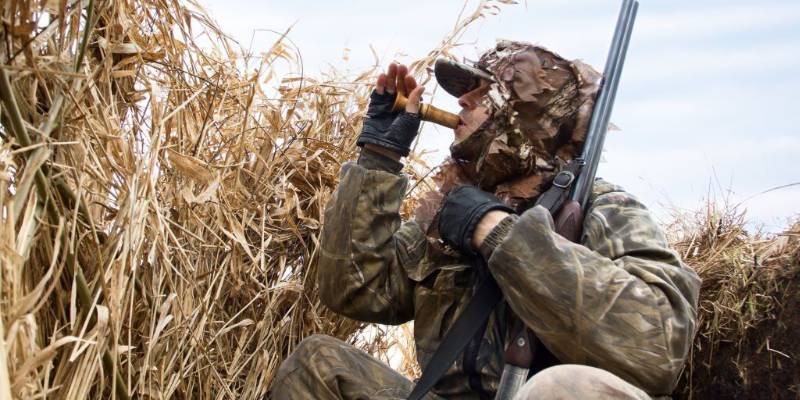
Quick Checklist: How to Stay Hidden While Hunting
Before heading into the field, use this checklist to improve your concealment:
- ✓ Wear camouflage suited to the terrain.
- ✓ Cover your face and hands.
- ✓ Check wind direction.
- ✓ Control human scent.
- ✓ Reduce equipment noise.
- ✓ Stay seated whenever possible.
- ✓ Avoid sudden movement.
- ✓ Use natural vegetation around your blind.
- ✓ Eliminate reflective surfaces.
- ✓ Be patient and let the game come to you.
FAQs About Staying Hidden While Hunting
Wear camouflage appropriate for the terrain and season where you’ll be hunting. Choose patterns that help break up your outline rather than focusing only on color. Cover exposed skin when appropriate, and consider scent-free clothing and laundering practices where scent management is important.
Use scent-free soaps and detergents, store hunting clothing away from strong household odors, and pay close attention to wind direction. Scent-control products may be used as an additional measure, but they should not replace proper wind management.
Is it necessary to use a blind or tree stand for concealment?
Using a blind or tree stand can significantly enhance your concealment. Choose a location that provides natural cover, and use blinds or stands that match the surrounding vegetation.
How can I use natural cover to my advantage?
Position yourself against natural cover, such as trees, rocks, or bushes, to break up your outline. Avoid skyline positions that make you more visible to game animals.
How can I minimize noise while hunting?
Choose quiet clothing and gear, and move slowly to minimize noise. Pay attention to your surroundings and be mindful of steps on leaves, twigs, or other noisy surfaces.
Dawn and dusk are optimal times for hunting, as the low light conditions make it more challenging for game animals to spot you. Plan your movements and setups accordingly.
What should I do if I get spotted by game animals?
Stay still and avoid making sudden movements. Use natural cover to your advantage, and wait for the animal to become more relaxed before attempting any further actions.
We hope this guide was helpful! If you have any questions, feel free to leave a comment below, and we’ll be happy to help.