Mastering Mountain Bike Cornering

“By Robert Smith – Over 10 Years of MTB Experience, I’ve ridden everything from flow trails and bike parks to rocky technical singletrack. One of the biggest lessons I’ve learned is that cornering speed comes from proper setup before the turn—not aggressive braking or sudden movements inside it. The techniques shared in this guide are the same fundamentals I continue to use on every ride.”
Cornering is one of the most crucial skills in mountain biking. Whether you’re a beginner learning the ropes or an intermediate rider looking to refine your technique, proper cornering can make a massive difference in your control, confidence, and overall speed. I’ve spent over a decade riding and fine-tuning my skills, and I’m excited to share everything I’ve learned with you. This guide will not only help you improve but also keep us connected as you continue your MTB journey.
Why Proper Cornering Matters
Good cornering isn’t just about going faster—it’s about control, efficiency, and safety. When done correctly, it allows you to maintain speed, reduce fatigue, and ride smoother, whether you’re tackling flowy singletrack or technical switchbacks.
Breaking Down the Perfect Corner
To corner like a pro, you need to focus on five key elements:
1. Body Position: Stay Balanced and Ready
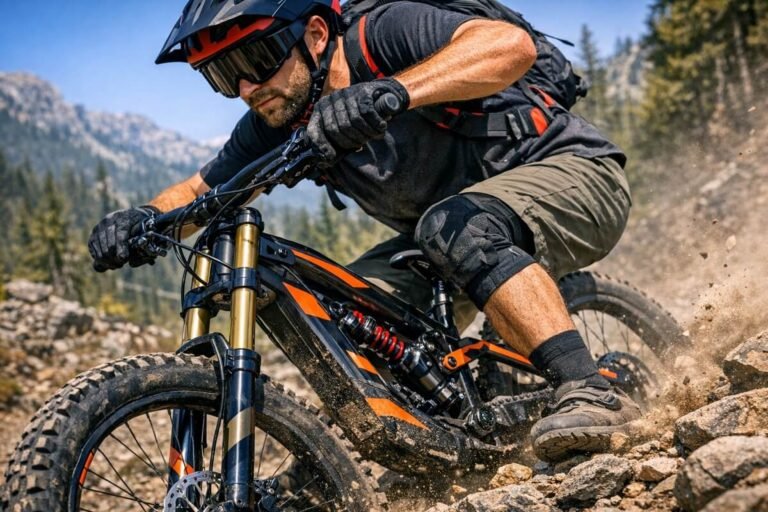
- Keep your elbows bent and your knees slightly flexed for better shock absorption.
- Stay centered over the bike, with your weight evenly distributed.
- Lower your chest toward the handlebars for a lower center of gravity.
- Always look where you want to go—not at obstacles!
If you’re practicing cornering drills or riding technical trails, wearing quality knee protection can boost confidence and reduce injury risk during unexpected falls.
For a visual demonstration, check out this video:
2. Braking: Slow Down Before, Not During
- Brake before entering the turn, not while in it.
- Use both brakes, but favor the rear slightly to avoid skidding.
- Release the brakes as you lean into the turn to maintain grip and momentum.
This video offers excellent insights into braking techniques:
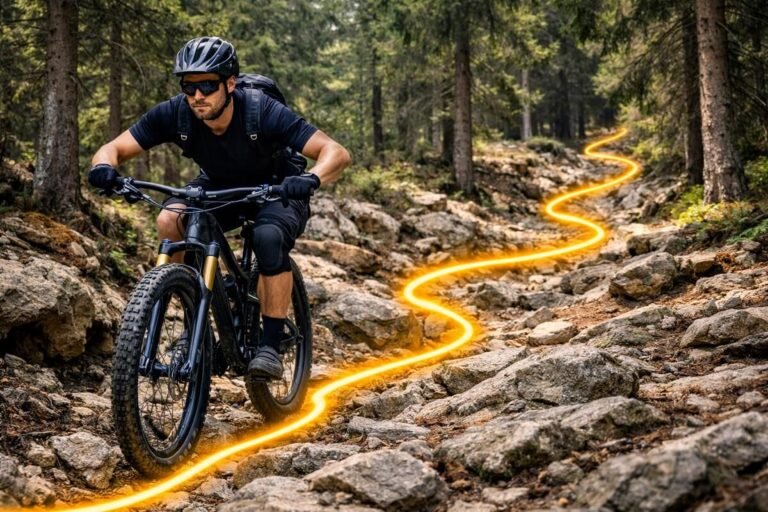
3. Line Choice: Pick the Fastest and Safest Path
- The widest entry point allows for a smoother and faster exit.
- Look for the apex (the middle of the turn) and aim for a clean exit.
- Avoid sharp, jerky movements—smoothness is key.
Learn more about line choice in this tutorial:
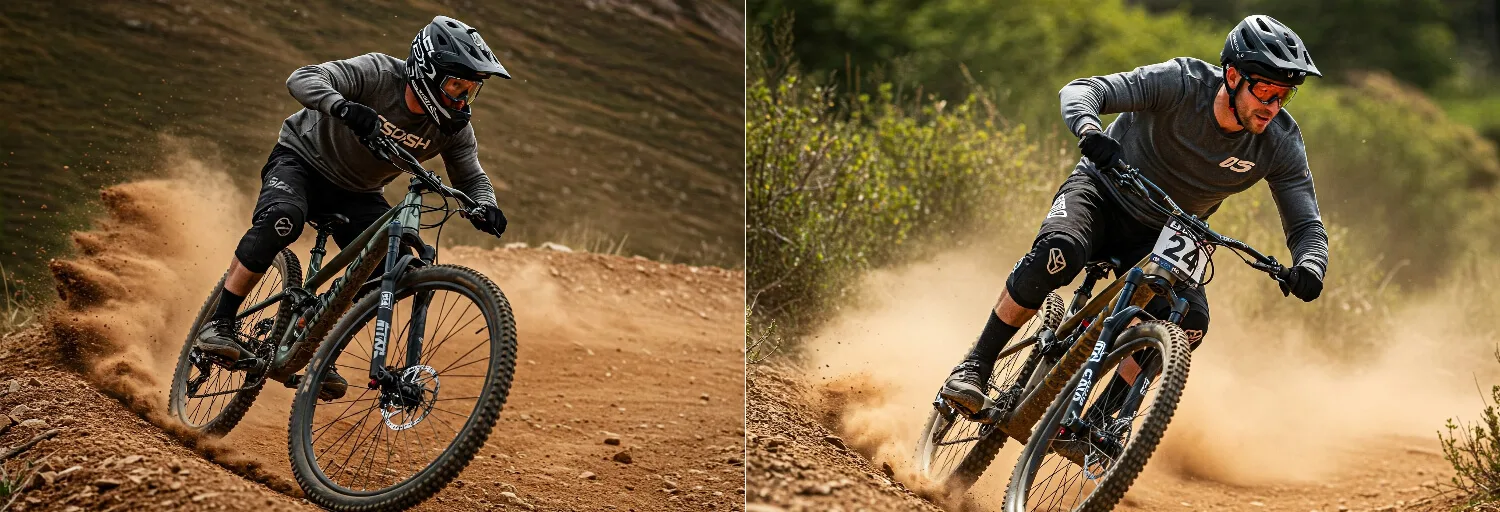
4. Leaning: Let the Bike Tilt, Not Just Your Body
- Shift your weight slightly to the outside foot for better traction.
- Lean the bike into the turn while keeping your body more upright.
- Push down on the handlebars to keep traction on the front wheel.
Proper technique is only part of the equation—your tires play a major role in cornering grip. Riders looking for maximum traction should explore our roundup of the best mountain bike tires for trail riding to find options suited for loose, rocky, and hardpack terrain.
This video explains leaning techniques effectively:
5. Exiting: Power Out of the Turn
- As you finish the turn, straighten the bike gradually.
- Apply power smoothly to accelerate without spinning the rear wheel.
- Scan ahead for the next section of the trail to maintain momentum.
For tips on exiting turns, watch this video:
Advanced Cornering Tips
- Bermed Turns: Let the banked turn do the work—lean into it and use speed to your advantage.
- Flat Corners: Lower your center of gravity and apply pressure to the outside pedal for extra grip.
- Loose or Muddy Turns: Be extra smooth with braking and weight shifts to avoid slipping.
Suspension setup can dramatically affect how your bike handles corners. A responsive fork helps maintain front-wheel traction and control, especially on rough trails. See our guide to the best mountain bike forks to learn which models perform best for trail and all-mountain riding.
This advanced tutorial covers various cornering techniques:
Common Mistakes to Avoid
- Looking down instead of ahead.
- Braking too hard in the middle of a turn.
- Not leaning the bike enough.
- Sitting too upright and not staying dynamic.
Identify and correct common mistakes with this guide:
FAQs About Mountain Bike Cornering
How Fast Should You Enter a Mountain Bike Corner?
Many riders enter corners too fast and then brake mid-turn, which reduces traction and control. A good rule is to enter at a speed that allows you to stop within your visible trail distance if necessary. As your cornering skills improve, you’ll naturally carry more speed while maintaining grip.
Should Your Outside Foot Be Down When Cornering?
Yes. In most mountain bike corners, the outside pedal should be in the 6 o’clock position with pressure applied through your heel. This lowers your center of gravity and increases tire traction. However, in some tight switchbacks or technical sections, experienced riders may keep the pedals level to avoid pedal strikes.
Why Does My Front Wheel Wash Out in Corners?
Front-wheel washouts usually happen because of:
- Entering the turn too fast
- Braking while leaning
- Looking down instead of through the corner
- Insufficient weight on the front tire
- Poor tire pressure or worn tires
Focus on braking before the turn and keeping your eyes on the exit.
What Tire Pressure Is Best for Cornering Grip?
There is no universal pressure because rider weight, tire width, terrain, and bike setup all affect grip. Most trail riders use lower pressures than road cyclists to maximize traction. Experiment gradually while staying within your tire manufacturer’s recommended range.
Are Flat Corners Harder Than Bermed Corners?
Generally, yes. Berms provide support that helps hold the bike through the turn. Flat corners require more precise body positioning, tire grip management, and weight distribution because there is no banked surface assisting the turn.
How Long Does It Take to Improve Mountain Bike Cornering?
Most riders notice significant improvements after a few dedicated practice sessions. Consistent drills focusing on vision, braking, body position, and line choice can produce noticeable gains within a few weeks.
Do Wider Tires Improve Cornering Performance?
Wider mountain bike tires often provide a larger contact patch and increased traction, particularly on loose terrain. However, tire compound, tread pattern, pressure, and riding technique have a greater impact on cornering performance than width alone.
Let’s Ride Together!
I hope this guide, along with the accompanying videos, helps you sharpen your cornering skills. If you have questions or want to connect for more MTB instruction, follow my journey, and let’s ride together! Drop a comment or reach out—I’d love to help you progress further. If you’re considering an upgrade, take a look at our picks for the best mountain bikes available today.
See you on the trails! 🚵♂️