Indoors Bowhunting Practice During Winter: Techniques

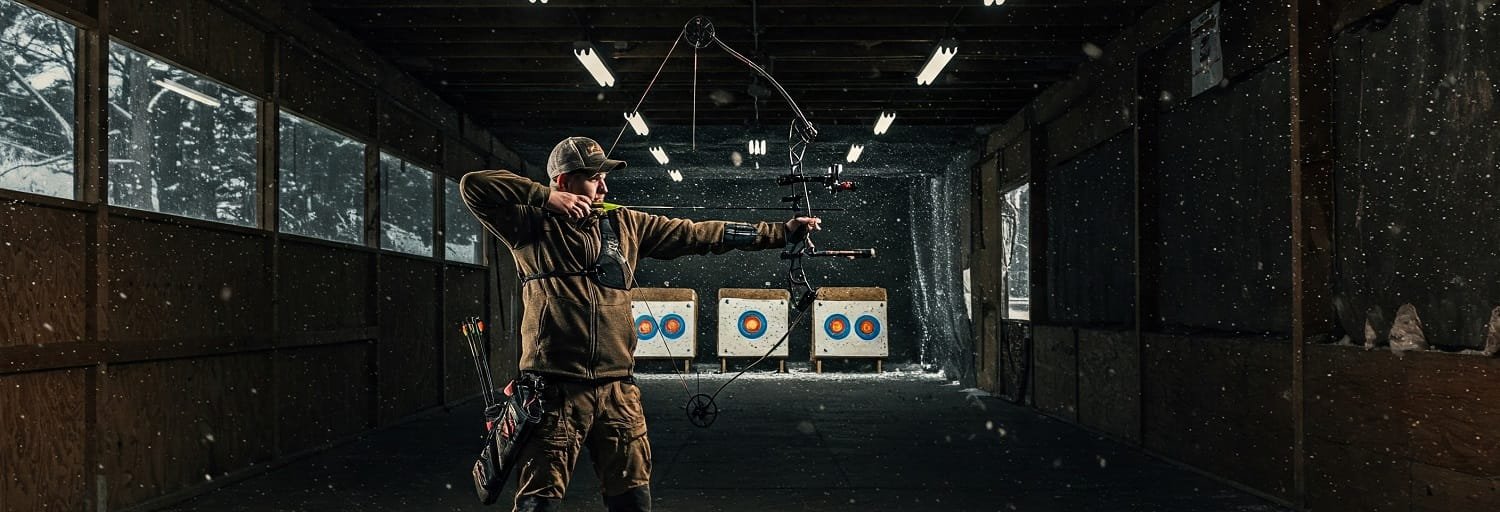
Winter doesn’t have to put your bowhunting practice on hold. Cold temperatures, snow, and shorter daylight hours can make outdoor practice difficult, but an indoor setup can help you maintain your form, shot routine, and confidence before the next hunting season.
The key is creating a safe shooting space and focusing on repeatable fundamentals rather than simply putting arrows downrange. In this guide, I’ll cover practical ways to practice bowhunting indoors during winter, from setting up your space and improving form to using 3D targets, tracking progress, and maintaining your equipment.
Based on hands-on bowhunting experience: I use the winter off-season to work on form, consistency, and equipment maintenance so I’m not starting from scratch when hunting season returns.
1. Why Practice Bowhunting Indoors During Winter?
Benefits of Indoor Practice
Practicing bowhunting indoors during winter offers several advantages:
Indoor practice allows you to maintain a regular training schedule, regardless of weather conditions. You can focus on specific aspects of your technique without distractions like wind, rain, or cold. Indoor practice is ideal for refining your form, accuracy, and shot execution. You can practice in the comfort of your home, saving time and effort.
Overcoming Winter Limitations
Winter can be a challenging time for bowhunters, but indoor practice ensures you don’t lose momentum. By setting up a dedicated practice space and using the right techniques, you can continue to develop your skills and stay prepared for the next hunting season.
2. Setting Up Your Indoor Practice Space
Choosing the Right Location
Selecting the right location for indoor practice is crucial. Consider the following:
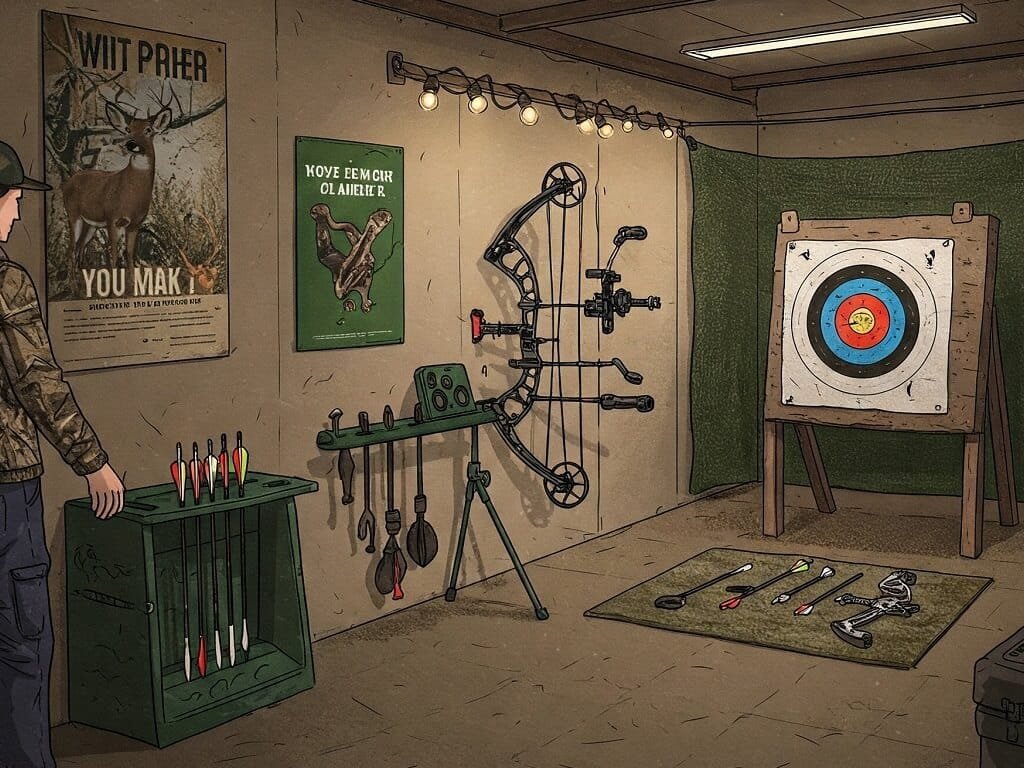
Ensure you have enough room to draw your bow and shoot safely. Make sure you have enough clear space for your bow, shooting distance, target, and backstop. Many indoor setups use shorter distances than outdoor ranges, but the appropriate distance depends on your equipment, target, and available space.
Furthermore, make sure the ceiling is high enough to accommodate your bow’s draw length and arrow trajectory. Use a sturdy backstop or archery net to catch arrows and prevent damage to walls or furniture.
Safety Considerations
Before shooting, make sure the entire shooting lane is clear and that everyone in the home knows the area is in use. Use a suitable target and backstop rated for your bow and arrows, and never rely on drywall, furniture, or improvised materials to stop an arrow.
Inspect your bow strings, cables, arrows, and target before each session. If you cannot create a controlled shooting lane, use a dedicated indoor archery range instead.
Essential Equipment for Indoor Practice
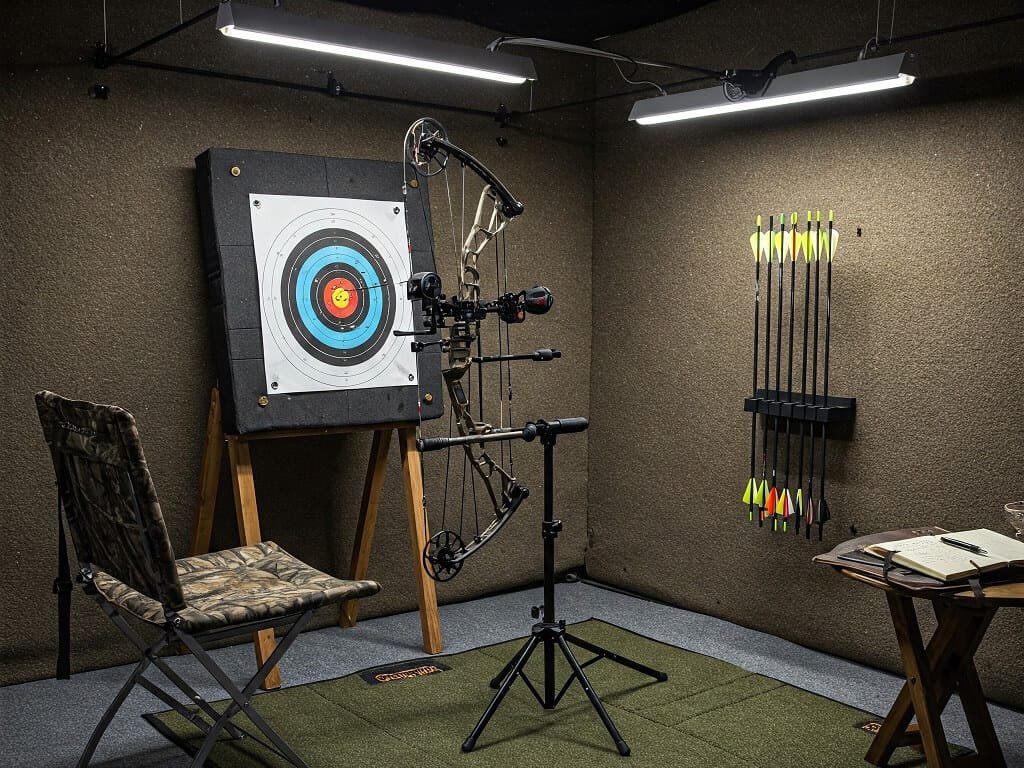
To set up an effective indoor practice space, you’ll need the following:
- Archery Target: Choose a high-quality foam or layered target designed for indoor use.
- Backstop Net: A durable net to catch arrows that miss the target.
- Lighting: Proper lighting is essential for visibility and accuracy.
- Bow Stand: A stand to hold your bow when not in use.
- Arrow Puller: A tool to remove arrows from the target safely.
When using a 3D target indoors, focus on shot placement and consistent. Stop trying to make every shot as realistic as possible. Keep the target distance appropriate for the space and equipment you’re using.
3. Indoor Practice Techniques
Form and Technique Drills
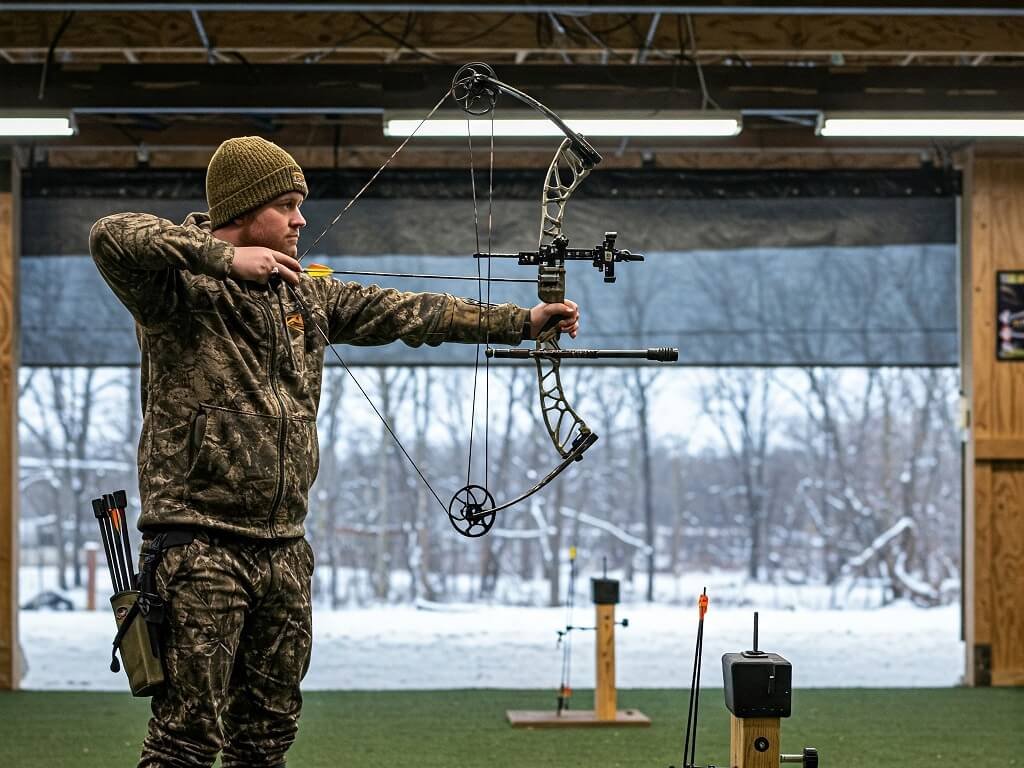
Indoor practice is an excellent opportunity to refine your form and technique. Practice maintaining a stable and balanced stance. Focus on consistent draw length and anchor points. Work on smooth releases and proper follow-through.
Indoor practice is an excellent opportunity to refine your form and technique. Practice maintaining a stable and balanced stance. Focus on consistent draw length and anchor points. Work on smooth releases and proper follow-through. These fundamentals can also help you improve your bowhunting accuracy.
Strength and Conditioning Exercises
Bowhunting requires physical strength and endurance. Incorporate these exercises into your routine:
- Resistance Band Training: Use bands to simulate drawing your bow and build muscle strength.
- Core Workouts: Strengthen your core with planks, sit-ups, and other exercises.
- Cardio: Maintain your stamina with running, cycling, or other cardio activities.
Mental Focus and Visualization
Mental preparation is just as important as physical practice. Imagine yourself in real hunting scenarios and visualize successful shots. Practice controlled breathing to stay calm and focused. Set specific goals for each practice session and track your progress.
Example 20-Minute Indoor Practice Routine
- 5 minutes: Resistance-band warm-up and form practice
- 5 minutes: Blank-bale or close-range form work
- 5 minutes: Controlled accuracy drills
- 3 minutes: Visualization and breathing
- 2 minutes: Record your results and note areas to improve
Instead, keep the emphasis on consistent shooting as many arrows as possible. Stop if your form begins to deteriorate or fatigue affects your control.
4. Using Technology to Enhance Indoor Practice

Bow Trainers and Simulators
Bow trainers and simulators can provide a realistic practice experience. These devices allow you to practice drawing and releasing without firing an arrow. Simulators use screens and sensors to recreate hunting scenarios.
Video Analysis Tools
Recording your practice sessions can help you identify areas for improvement. Use apps like Coach’s Eye to analyze your form and technique. Set up a tripod to record your shots from different angles.
Video analysis is particularly useful because you can review your stance, draw cycle, anchor point, release, and follow-through, avoiding relying only on how the shot feels.
Mobile Apps for Bowhunters
Several apps are designed to help bowhunters improve their skills:
- Archery Calculators: Calculate arrow trajectory and windage adjustments.
- Shot Tracking: Track your accuracy and progress over time.
- Hunting Scenarios: Practice decision-making and shot placement in virtual hunting scenarios.
5. Practice Realistic Hunting Scenarios Indoors
3D Targets and Shooting Games
3D targets and shooting games can make indoor practice more engaging:
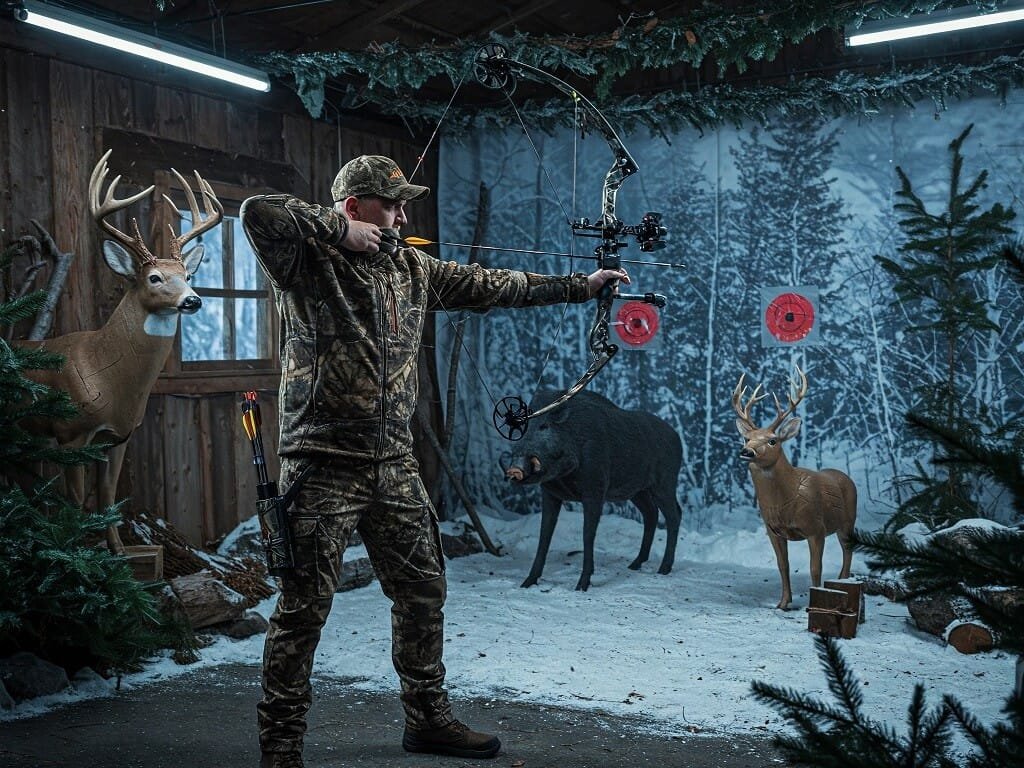
- 3D Targets: Use lifelike animal targets to simulate real hunting conditions.
- Shooting Games: Create fun challenges like timed shots or accuracy competitions.
Simulating Hunting Conditions
Recreate hunting scenarios to practice real-world skills. Use dim lighting to simulate dawn or dusk conditions. Set up obstacles to practice shooting from different angles and positions.
Practicing Shot Angles and Distances
Indoor practice is ideal for mastering shot angles and distances. Use a platform or stool to practice shooting from elevated positions. Focus on accuracy at shorter distances, which are common in hunting scenarios.
6. Maintaining Your Equipment Indoors
Bow Maintenance Tips
Regular maintenance ensures your bow performs at its best:
- Inspect Strings and Cables: Check for wear and tear and replace as needed.
- Wax the Strings: Apply bowstring wax to keep the strings in good condition.
- Tune Your Bow: Make sure your bow is tuned properly for optimal performance.
Arrow Care and Tuning
Keep your arrows in top shape:
- Check for Damage: Inspect arrows for cracks, bends, or other damage.
- Replace Fletching: Replace worn or damaged fletching to maintain arrow stability.
- Test Arrow Flight: Ensure your arrows fly straight and true.
Storing Gear in Winter
Proper storage prevents damage during the off-season. Wipe down your bow and arrows to remove dirt and debris. Keep your gear in a cool, dry place to prevent rust or warping. Store your bow in a protective case to prevent damage.
7. Staying Motivated During Winter
Setting Goals and Tracking Progress
Set specific goals to stay motivated:
- Short-Term Goals: Focus on improving specific skills or techniques.
- Long-Term Goals: Aim for overall improvement or preparation for the next hunting season.
- Track Progress: Use a journal or app to record your achievements.
Track more than your overall score. Record group size, shooting distance, number of shots, and any form issues you notice during each session. Over several weeks, these notes can show whether your consistency is improving.
Joining Indoor Leagues or Competitions
Indoor leagues and competitions provide motivation and camaraderie. Join a club to meet other bowhunters and participate in events. Compete in online archery challenges or tournaments.
Incorporating Fun and Variety
Keep your practice sessions enjoyable:
- Try New Drills: Experiment with different drills and exercises.
- Invite Friends: Practice with friends or family to make it a social activity.
- Reward Yourself: Celebrate milestones with small rewards.
8. Common Mistakes to Avoid
- Overlooking Safety: Always prioritize safety to prevent accidents or injuries.
- Neglecting Form and Technique: Focus on proper form and technique to avoid developing bad habits.
- Focusing Solely on Accuracy: While accuracy is important, don’t neglect other aspects like strength, endurance, and mental focus.
FAQs: Indoors Bowhunting Practice During Winter
Is indoor bowhunting practice worth doing during winter?
Yes. Indoor practice can help you maintain shooting consistency and work on fundamentals when cold weather, snow, or limited daylight makes outdoor practice difficult.
What is the best way to practice bowhunting indoors?
Focus on repeatable fundamentals such as stance, anchor point, draw cycle, release, follow-through, and controlled shot execution. Short, consistent sessions are generally more useful than simply shooting a large number of arrows.
Can I use a 3D target for indoor bow practice?
Yes, if the target is appropriate for your bow and indoor setup. A 3D target can make practice more engaging while allowing you to work on shot placement and different aiming scenarios.
How can I track my bowhunting practice progress?
Record useful measurements such as group size, shooting distance, number of shots, and any form issues you notice. Reviewing these notes over several weeks can help you identify improvements or recurring problems.
What safety precautions should I take when practicing archery indoors?
Use a clear shooting lane, an appropriate target and backstop, and keep people and pets away from the shooting area. Inspect your bow, arrows, and target before each session, and use a dedicated indoor archery range if you cannot create a safe home setup.
Conclusion
Indoor bowhunting practice can help you maintain consistency through the winter without depending on favorable weather. Focus on safe setup, repeatable form, controlled drills, and regular progress tracking rather than simply shooting more arrows.
A short, consistent practice routine can keep your skills sharp and make the transition back to outdoor hunting practice much easier when the season approaches. Always inspect your equipment and use a properly rated target and backstop before shooting.
A short, consistent practice routine can keep your skills sharp and make the transition back to hunting season preparation much easier when the season approaches.