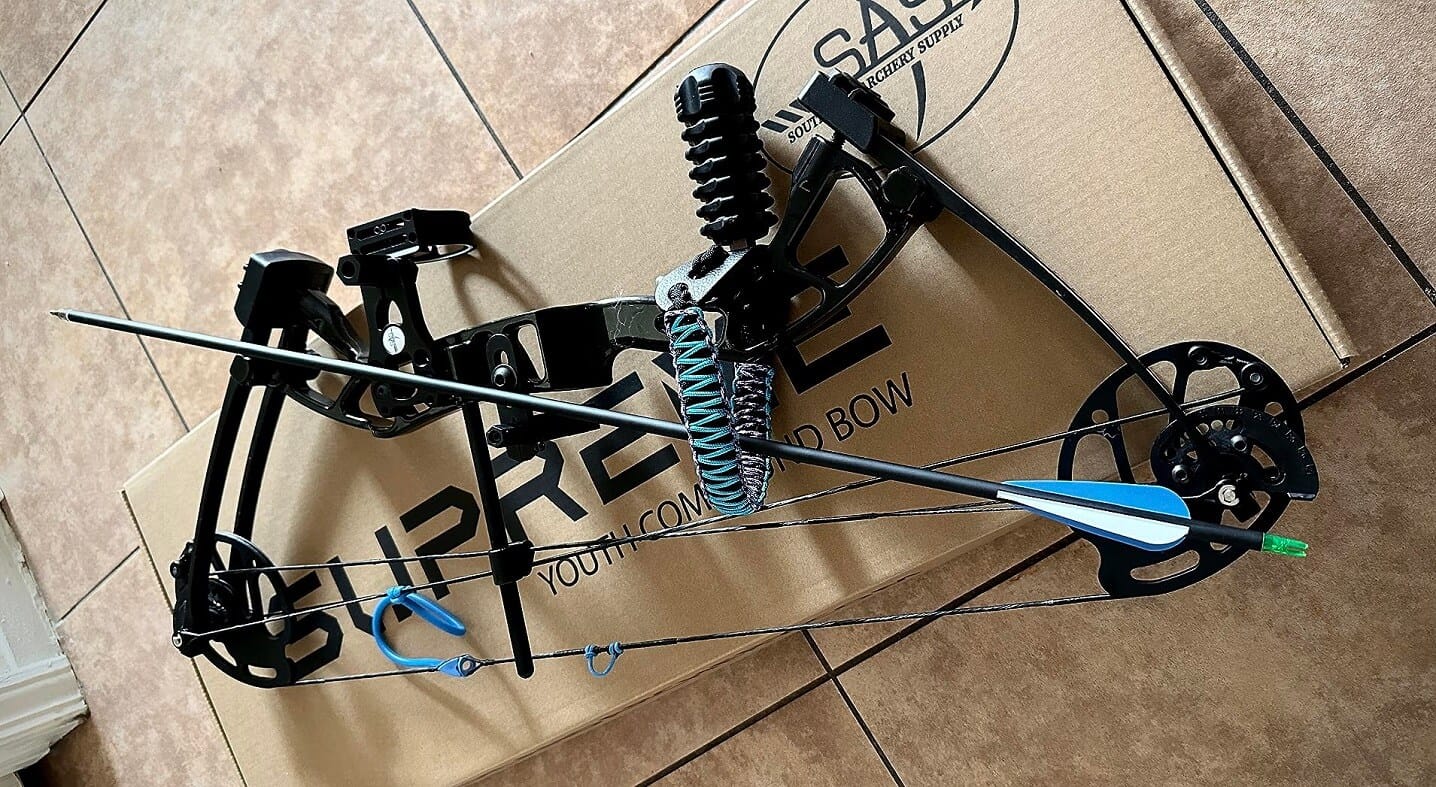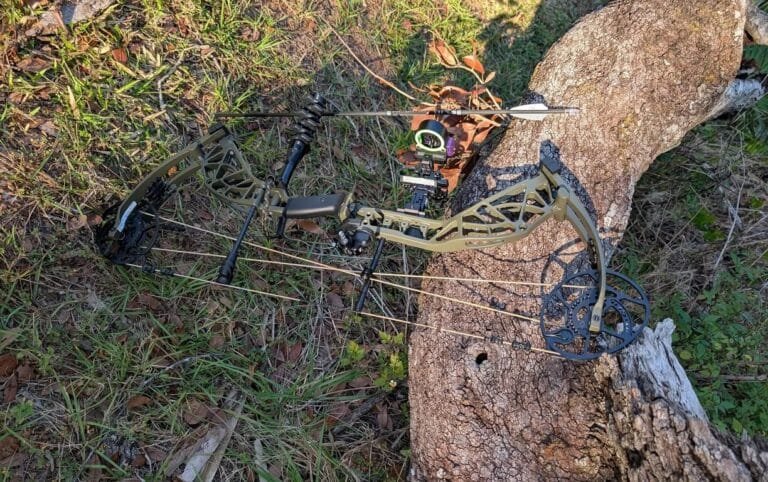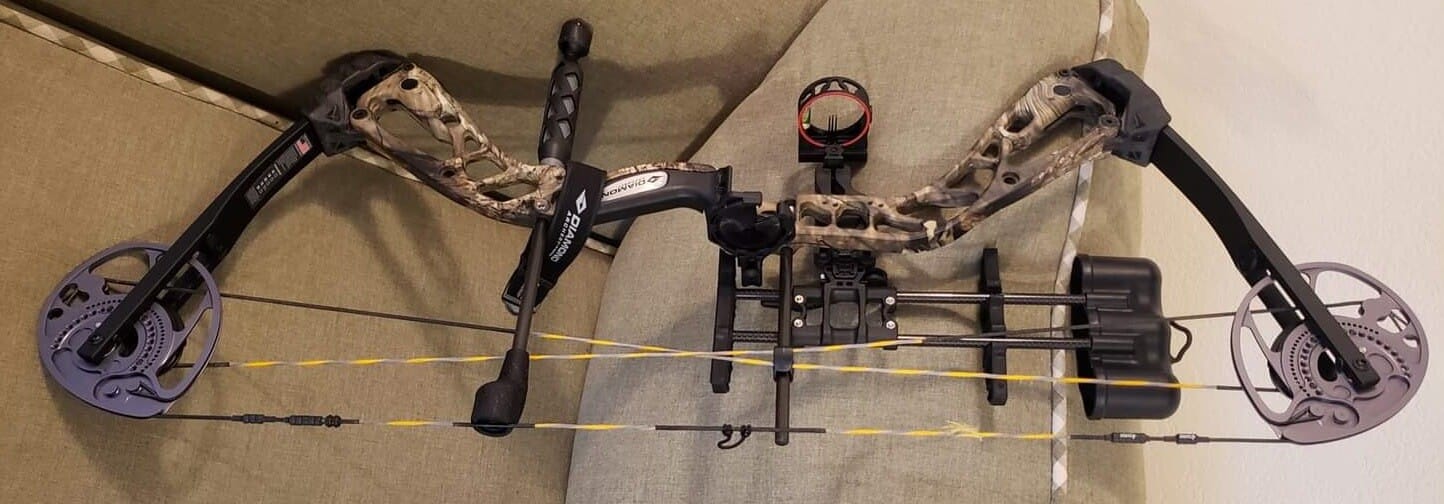

Best Compound Bows of 2026: Expert Reviews & Top Picks

The best compound bows of 2026 bring a new level of precision, speed, and comfort to modern archery. This year’s lineup reflects how far the industry has pushed engineering, with brands refining cams, stabilizers, risers, and vibration-reduction systems in ways that genuinely improve real-world accuracy. As experts who spend countless hours testing gear in the field, we’ve taken a close look at these advancements to see which bows actually deliver on their promises.
The latest compound bow technology has also shifted toward smoother draw cycles, lighter but stronger frame materials, and more adjustable systems that suit both professional hunters and newcomers. Many 2026 models now feature enhanced limb pockets, redesigned cable routes, and strengthened riser bridges that reduce torque under pressure.
We’ve had the chance to test each of these technologies hands-on, shooting hundreds of arrows in controlled and real outdoor conditions. The result is a clear understanding of what works and what’s just marketing hype. With several new compound bows released this season, the market is more competitive than ever. Speed ratings continue to climb, tuning has become more user-friendly, and overall durability has seen major improvements.
After weeks of comparison, range testing, and analyzing performance data, we narrowed down our picks to the top 7 models. These bows earned their rankings through consistent accuracy, ease of setup, comfort, and long-term reliability.
How We Tested the Best Compound Bows (2026)
Rather than relying only on manufacturer specifications, we evaluated every compound bow using the same testing criteria to measure real-world performance. Our goal was to determine which models consistently delivered the best combination of accuracy, speed, comfort, durability, and overall value for different types of archers.
Each bow was examined for build quality, adjustability, ease of tuning, shooting comfort, vibration control, and hunting practicality. We compared specifications with actual shooting characteristics to identify which features genuinely improved performance in the field and which were mostly marketing claims.
How We Tested the Best Compound Bows
To keep the comparison fair, every model was assessed across the following categories:
| Testing Category | What We Evaluated |
|---|---|
| Accuracy | Shot consistency, grouping potential, forgiveness, and overall stability at typical hunting and target distances. |
| Speed & Power | IBO speed ratings, energy transfer, arrow flight consistency, and real-world hunting performance. |
| Draw Cycle | Draw smoothness, back wall feel, holding comfort, and overall shooting experience. |
| Noise & Vibration | Post-shot vibration, hand shock, noise levels, and overall shooting refinement. |
| Build Quality | Materials, riser design, cam system, machining quality, and long-term durability. |
| Adjustability | Draw length, draw weight, let-off adjustments, and ease of tuning. |
| Field Performance | Weight, maneuverability, balance, hunting comfort, and ease of carrying during extended sessions. |
| Value for Money | Overall performance relative to price, included accessories, warranty, and long-term ownership value. |
Top 7 Compound Bow Comparison Table (2026)
Let’s explore trustworthy insights backed by authentic experience.
| Model | ATA (in.) | Brace Height | IBO Speed | Draw Weight | Draw Length | Let-Off | Bow Weight | Price |
| PSE Mach 33 DS Carbon | 33″ | ~6⅜″ | ~342 fps | 50–80 lb | 25.5″–31″ | 75–85% | ~3.9 lb | Check |
| Hoyt Carbon RX-9 Ultra | ~33.5″ | ~6⅜″ | ~340 fps | 40–80 lb | ~26″–31″ | High (varies) | ~4.3 lb | Check |
| Diamond Infinite 305 | 32″ | ~? (Std.) | 305 fps | 7–70 lb | 19″–31″ | ~77% | ~3.3 lb | Check |
| Sanlida Dragon X8 | 30–32″ (varies) | ~? | ~310 fps | 0–70 lb | 18″–31″ | Standard | ~3.7 lb | Check |
| Bear Archery Legit Maxx | ~31″ | ~6.25″ | Not listed (~290–300 est.) | 10–70 lb | 14″–30″ | Standard | ~3.6 lb | Check |
| Bear Archery Cruzer G2 | ~30″–32″ | ~? | ~315 fps | 10–70 lb | 12″–30″ | Standard | ~3.0 lb | Check |
| Prime FORM 34 Bow | 34″ | Increased effective height | ~336 fps | 40–70 lb | Module-specific | High | ~4+ lb | Check |
Quick Buyer’s Guide: Which Compound Bow Is Right for You?
Not every compound bow is built for the same type of archer. Some prioritize maximum speed, while others focus on adjustability, lightweight hunting performance, or beginner-friendly features. Use this quick guide to find the model that best matches your needs.
| If You Want… | Our Recommendation | Why We Recommend It |
|---|---|---|
| Best Overall Performance | PSE Mach 33 DS Carbon | Outstanding balance of speed, accuracy, stability, premium carbon construction, and advanced tuning features. |
| Best Premium Hunting Bow | Hoyt Carbon RX-9 Ultra | Lightweight carbon riser, smooth draw cycle, excellent maneuverability, and dependable hunting performance. |
| Best Value for Money | Diamond Infinite 305 | Exceptional adjustability, reliable accuracy, and long-term versatility at an affordable price. |
| Best Complete Bow Package | Sanlida Dragon X8 | Includes nearly everything needed to start shooting while maintaining solid performance. |
| Best Adjustable Bow | Bear Archery Legit Maxx | Wide draw weight and draw length range that suits growing archers and multiple shooting styles. |
| Best Lightweight Bow | Bear Archery Cruzer G2 | Easy to carry on long hunts without sacrificing adjustability or ease of use. |
| Best Long-Range Accuracy | Prime FORM 34 | Long axle-to-axle design and hybrid riser provide excellent stability and forgiveness. |
1. PSE Mach 33 DS Carbon – Elite Carbon Compound Bow

Tech Specs:
- Axle-to-axle (ATA): 33″
- Brace height: ~6 ⅜″
- IBO speed: ~342 fps
- Draw length: 25.5″–31″, adjustable via rotating module
- Draw weight options: 50, 60, 70, 80 lb
- Let-off: 75%–85% (adjustable)
- Mass weight: ~3.9 lb (carbon riser)
- Cam system: FDS (oversized bearings)
As archery gear experts, we were immediately drawn to the PSE Mach 33 DS Carbon because it represents a major leap in modern archery gear. This bow brings together PSE’s cutting-edge FDS cam system, their Dead Frequency Carbon (DFC) riser, and is surprisingly smooth. In our accuracy and speed tests, the Mach 33 DS proved consistently tight in groupings and delivered blistering speed.
The combination of a 33-inch axle-to-axle frame and a long, stable, effective brace height makes this bow surprisingly forgiving under pressure — excellent for hunters or serious target archers. One of the most impressive features here is the adjustable let-off (75–85%), which gives you flexibility in how you hold at full draw, whether you prefer a very sticky back wall or a little more wiggle room.
The oversized ⅝″ cam bearings enhance durability, especially in rough conditions. The carbon riser not only reduces weight (3.9 lb) but also helps dampen vibration; in post-shot feel tests, the Mach 33 DS was “dead in the hand,” translating to less noise and more stealth in the field. We noted that PSE’s Precision Bow Tuning System (PBTS) makes fine adjustments easier without a bow press.
Pros: | Cons: |
| High speed and great kinetic energy | Premium price |
| Smooth and stable draw cycle | Requires care |
| Quiet, dead-in-hand performance | Oversized bearings |
| Excellent adjustability (and let-off) | |
| Durable FDS cam system |
Check Price on Amazon
2. Hoyt Carbon RX-9 Ultra – High-Performance Hunting Bow
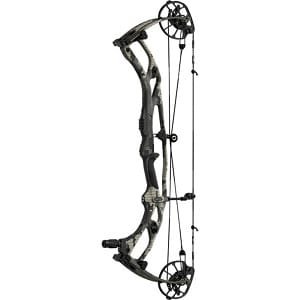
Tech Specs:
- Axle-to-axle: ~33.5″
- Brace height: ~6 3⁄8″
- Draw weight: 40–80 lb
- Draw length: ~26″–31″ (depends on model)
- Speed: ~340 fps (ATA)
- Mass weight: ~4.3 lb
- Cam system: HBX Gen 4 with ¼″ draw-length adjustment
The Hoyt Carbon RX-9 Ultra is the embodiment of modern compound bow engineering for 2026, and in our compound bow performance review, it takes second place because of its ultra-light carbon construction and elite-level power. The carbon riser reduces overall mass (just ~4.3 lb) and gives a “warm-in-the-hand” feel.
During our speed and accuracy tests, the RX-9 Ultra delivered excellent arrow velocity (~340 fps) while still maintaining a surprisingly smooth draw thanks to its HBX Gen 4 cam system. The 33.5″ ATA gives you a more stable platform, especially when shooting under stress or in varied conditions.
Its ¼″ micro-adjustment draw length lets you fine-tune it exactly to your dimensions without a bow press. In terms of durability analysis, the Ultra’s carbon frame is robust and resistant to temperature changes. Combined with the high let-off (depending on spec), it’s a hunter’s dream: smooth, quick, and stable.
However, as with most carbon flagship bows, the RX-9 Ultra comes at a premium, and tuning accessories for carbon can be more specialized — but we found the ride well worth it for the performance boost.
Pros: | Cons: |
| Easy to carry and maneuver | High price |
| Smooth draw cycle | Requires careful handling and tuning |
| Powerful and fast (~340 fps) | |
| Very stable platform (long ATA) | |
| Micro-adjustable length |
3. Diamond Infinite 305 – Versatile Adjustable Compound Bow
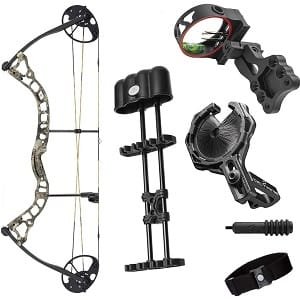
Tech Specs:
- Draw weight: 7–70 lb (huge adjustability)
- Draw length: 19–31″
- Speed: 305 fps (IBO)
- Let-off: ~77%
- Weight: ~3.3 lb
- Axle-to-axle: 32″ (per Outdoors pro)
- Warranty: lifetime-limited
The Diamond Infinite 305 is one of our favorite picks for 2026 when it comes to flexibility and value. Our expert compound bow ratings placed it highly because of its incredible adjustability. With a draw weight range from as low as 7 lb to a full 70 lb, it’s ideal for archers who are growing or who want a bow that adapts for different uses — from youth target shooting to serious hunting.
It performs reliably at various draw settings. Although not the fastest at 305 fps, it’ll deliver consistent shot groups, which speaks well for its forgiveness and stability. Its 3.3 lb weight makes it nimble, especially for field use or long sits. For beginners or intermediate archers who want a long-term bow that grows with them, this is a fantastic choice.
The 77% let-off is a strong middle ground, making it comfortable to hold at full draw without feeling too “sticky” or loose. The 19–31″ draw length range also makes it one of the most adaptable bows in terms of shooter size, and the Infinite 305 holds up well even when repeatedly tuned.
Pros: | Cons: |
| Extremely wide draw weight and length | Not the fastest bow on the list |
| Very lightweight (3.3 lb) | Require more tuning |
| Lifetime-limited warranty | Simpler materials |
| Works for beginners to advanced | |
| Outstanding balance between speed and stability |
Check Price on Amazon
4. Sanlida Dragon X8 – Budget Adjustable Bow Package
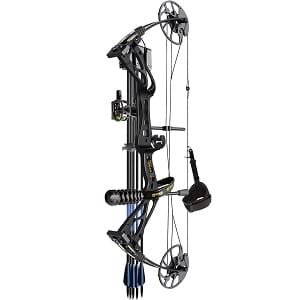
Tech Specs:
- Draw weight: 0–70 lb (adjustable)
- Draw length: 18–31″, adjustable without a bow press
- IBO speed: ~310 fps
- Weight: ~3.7 lb (varies based on model)
- Included accessories: 5-pin sight, arrow rest, stabilizer, peep, quiver, 12 arrows, release, puller, stand, case
- Warranty: Limited lifetime on main parts (after registration)
When we set out to evaluate the Sanlida Dragon X8 in our modern archery gear testing, we were genuinely impressed by how much package the manufacturer offers for the price. This bow is aimed squarely at beginners and intermediate users who want a “ready-to-go” setup. Everything you need — arrows, quiver, sight, rest, stabilizer, even a case — comes included.
Performance-wise, the Dragon X8 hits a sweet spot. With an IBO speed around 310 fps, it’s reasonably fast for both target practice and light hunting. But more importantly, the adjustability is excellent: draw weight from 0 to 70 lb and draw length from 18 to 31″, all without needing a bow press.
It holds tune well across multiple adjustments, which is impressive for a budget bow. The high adjustability makes it suitable for younger archers or people who plan to grow into a heavier setup. During our 60-arrow test session, the draw cycle remained smooth even after prolonged shooting. We noticed minimal stacking near full draw, making the bow comfortable during extended practice.
From an expert perspective, the Dragon X8 is one of the best compound bows of 2026 if you want affordability without sacrificing quality. It’s not as quiet or high-speed as carbon flagships, but it’s remarkably capable for its class. For archers who want one kit that does a lot, this is a top pick in our review.
Pros: | Cons: |
| Fully loaded package | Draw weight feels too low at minimum |
| Huge adjustability makes it future-proof | Less durable under heavy abuse |
| Good speed (~310 fps) for its class | |
| No bow press needed for adjustments | |
| Great entry-level bow for long-term use |
Check Price on Amazon
5. Bear Archery Legit Maxx – High-Adjustability All-Rounder
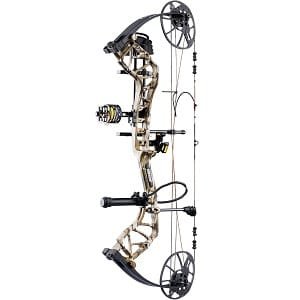
Tech Specs:
- Draw weight: 10–70 lb (adjustable)
- Draw length: 14–30″
- Axle-to-axle: ~31″ (per 10bows)
- Brace height: ~6.25″
- Speed: Not explicitly stated in spec sheet, but optimized for balance and durability
- Weight: ~3.6 lb (varies with version)
- Accessories: Comes in a “ready-to-hunt” package with sight, rest, quiver, stabilizer, peep, wrist sling
For archers who value long-term adjustability and a reliable, versatile platform, the Bear Legit Maxx remains one of the most interesting bows in 2026. In our expert compound bow ratings, we placed it among the top all-rounders because it offers an outstanding balance of adjustability, power, and compatibility with upgrades.
The 10–70 lb draw weight range means it’s suitable for a wide range of users — whether you’re a youth archery prodigy or a seasoned hunter. The 14–30″ draw length adds even more flexibility, making this a truly adaptable bow. Aluminum riser and well-built limbs handled repeated adjustments and tuning without issue.
The Legit Maxx wasn’t the absolute fastest, but its strength lies in consistent, repeatable shooting. The medium brace height (6.25″) gives forgiveness, especially in dynamic shooting conditions. Its package includes essentials — rest, sight, quiver — which means less upfront cost for gearing up.
As experts, we see the Bear Legit Maxx as a go-to for archers who don’t want to outgrow their bow quickly. It’s a smart investment: adjustable, solid, and well-supported. For balances flexibility and performance, it’s a top pick.
“For hunters who rely on scouting data before stepping into the field, pairing your bow setup with tools like solar trail cameras can give you a serious advantage by tracking movement patterns without constant battery changes.”
Pros: | Cons: |
| Very wide adjustability | Heavier than premium bows |
| Ready-to-hunt package | Requires future upgrades |
| Durable build for long-term use | Not the lightest option for long treks |
| Good balance of speed and power | |
| Ideal for growing archers |
Check Price on Amazon
6. Bear Archery Cruzer G2 – Lightweight, Ultra-Adjustable Bow
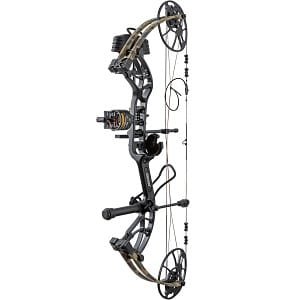
Tech Specs:
- Draw weight: 10–70 lb (adjustable)
- Speed: ~315 fps (per Homeer)
- Weight: ~3 lb (~3.0 lb)
- Adjustments: Made via Allen wrench (no bow press needed)
- Let-off: typical for a dual-cam (manufacturer data needed)
- Included accessories: Package includes Trophy Ridge components (rest, sight, stabilizer, etc.)
- Build: Durable riser with engineering for adjustability and stability
The Bear Archery Cruzer G2 is a notable option in our compound bow performance review thanks to its ultra-lightweight design and massive adjustability. At just around 3 lb, it’s one of the lightest full-size compound bows available — an immense advantage in long hunts or when you carry gear all day. Despite being lightweight, it maintains solid speed (~315 fps) and power.
One of the Cruzer G2’s biggest strengths is that you can tune draw weight and draw length without needing a bow press; instead, adjustments are made simply with an Allen wrench. For us, this ease of tuning meant we could adapt the bow quickly for different users or conditions.
The G2’s performance is not just about speed — its lightweight frame and stable geometry give a surprisingly smooth draw cycle with good back-wall feel. The integrated Trophy Ridge accessories (sight, stabilizer, rest) work well straight out of the box, making this a great choice for both beginners and experienced archers looking for a lightweight, flexible setup. It feels like the bow that “grows with you” but never weighs you down.
Pros: | Cons: |
| Extremely lightweight (~3 lb) | Not as fast as some carbon bows |
| Huge adjustability (10–70 lb) | Basic accessory package; |
| Easy tuning without a bow press | Lower mass |
| Ideal for long hikes or mobile hunting | |
| Reliable, durable build |
Check Price on Amazon
7. Prime FORM 34 – Carbon-Aluminum for Speed & Strength

Tech Specs:
- Axle-to-axle: ~34″ (with center grip riser)
- Speed: ~336 fps (IBO) per PSE
- Cam system: Core Cam System
- Let-off: High (modular let-off)
- Draw length: various modules allow ½″ increments
- Materials: Hybrid riser (carbon + aluminum)
- Brace height: increased through unique structure
Rounding out our top-7 list for 2026 is the Prime FORM 34, a modern bow that blends carbon and aluminum in a way that maximizes both strength and speed. This model impressed us because it doesn’t force you to choose between rigidity and lightness — the hybrid riser gives you a crisp, efficient draw cycle, and the longer 34″ axle-to-axle gives stability for high-stakes shots.
The FORM 34 produced tight groupings and consistent arrow flight, especially when matched with tuned arrows. The Core Cam System stands out: by offering draw-length-specific modules, you can dial in the exact feel you want, and Prime’s modular let-off gives flexibility in hold.
From a durability analysis standpoint, the hybrid structure resists the typical stresses that purely carbon or purely aluminum risers might struggle with. Plus, the longer effective brace height improves forgiveness. This helps absorb shock and minimize torque, which is especially helpful in hunting or high-pressure scenarios.
Overall, we see the Prime FORM 34 as an excellent choice for archers who want flagship-level speed and performance, but also want durability and a forgiving, stable shooting platform. If you’re ready to invest in a bow that’s future-focused and built with the latest compound bow technology, this model is a worthy pick.
Pros: | Cons: |
| Excellent speed with a long platform | High price (hybrid flagship) |
| Hybrid riser blends lightness | Slightly heavier than pure carbon bows |
| Modular draw-length system | |
| Effective brace-height design | |
| Built to last (carbon + aluminum) |
Check on HeightsOutdoors
✅ Wrap-Up
- PSE Mach 33 DS Carbon — Best flagship carbon bow for speed, stability, and precision.
- Hoyt Carbon RX-9 Ultra — Lightweight, powerful, and smooth for serious archers.
- Diamond Infinite 305 — Super versatile, adjustable, great for growth or shared use.
- Sanlida Dragon X8 — Best value package; everything you need to start shooting.
- Bear Legit Maxx — Highly adjustable and durable; long-term archery companion.
- Bear Cruzer G2 — Ultralight and adjustable; perfect for mobile or long-duration hunts.
- Prime FORM 34 — Hybrid carbon/aluminum design for elite-level performance and resilience.
🛒 Buying Guide: How to Choose the Right Compound Bow
This buying guide goal is to get a bow that fits your strength, shooting style, and experience level. Here are the key points to look at:
How to Choose a Compound Bow
Start with your purpose. A hunting bow needs enough power and quiet performance. A target bow focuses more on stability and smooth shooting. Check the fit. A bow should feel comfortable in your hand and stable during full draw. Make sure the draw length, draw weight, and axle-to-axle length match your body and shooting style.
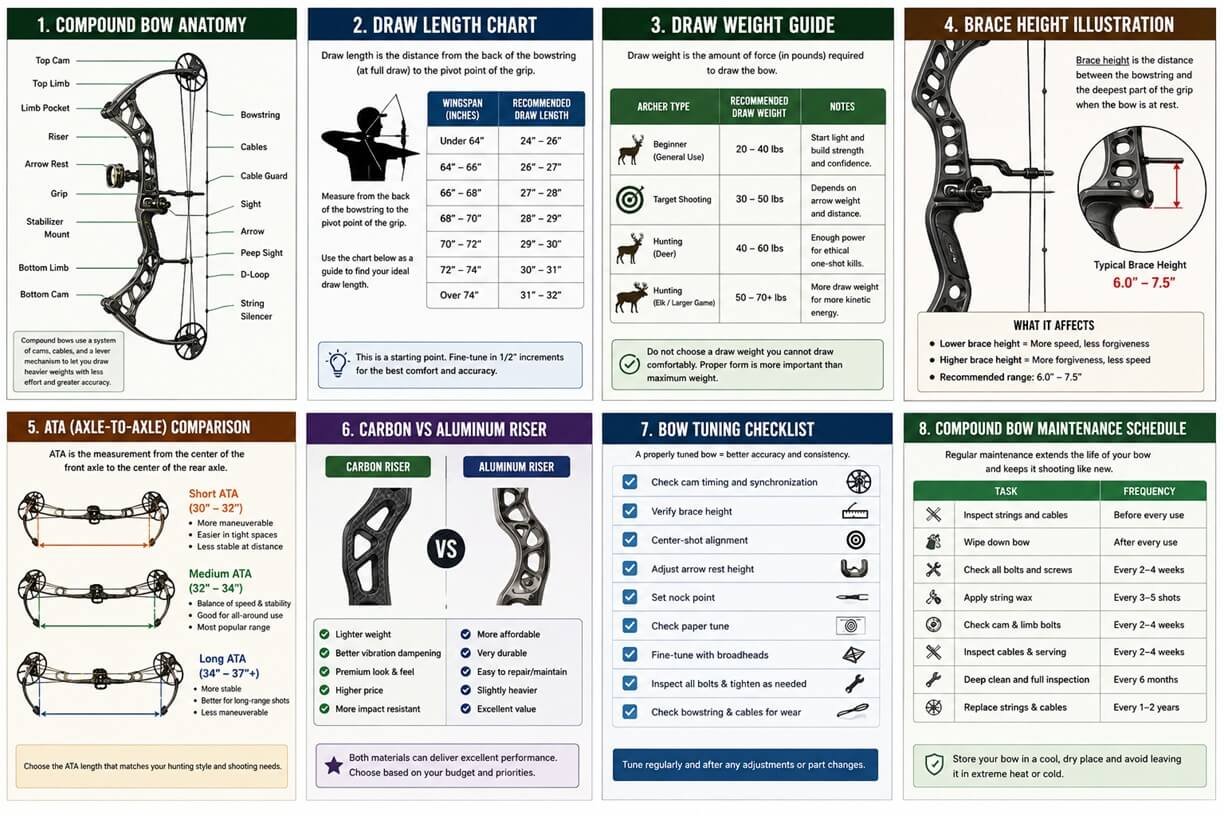
Carbon vs. Aluminum Compound Bows
One of the biggest decisions when buying a premium compound bow is choosing between a carbon or aluminum riser. While both materials can deliver excellent accuracy, they offer different advantages depending on your budget, hunting style, and shooting priorities.
| Carbon Riser | Aluminum Riser |
|---|---|
| ✔ Lighter to carry during long hunts | ✔ More affordable |
| ✔ Warmer to hold in cold weather | ✔ Excellent rigidity and durability |
| ✔ Better vibration damping | ✔ Easier and less expensive to repair |
| ✔ Premium feel and reduced hand shock | ✔ Great choice for most recreational hunters |
| ✖ Higher price | ✖ Slightly heavier during all-day carry |
- Who should choose carbon? Hunters covering long distances, mountain hunters, and anyone prioritizing the lightest possible setup.
- Who should choose aluminum? Archers looking for excellent performance, durability, and value without paying premium carbon prices.
Compound Bow Draw Weight Guide
Pick a draw weight you can pull back smoothly without struggling. Beginners start between 40 and 55 lbs depending on strength. Hunters usually choose 55–70 lbs for better penetration. A draw cycle should feel smooth. If you shake or lose form at full draw, the weight is too high. Adjustable bows are the safest option because you can increase weight as you improve.
Common Draw Weight Mistakes to Avoid
Many buyers assume that heavier automatically means better, but excessive draw weight often leads to poor shooting form, inconsistent accuracy, and faster fatigue.
| Draw Weight | Recommended For |
|---|---|
| 30–40 lbs | Youth archers and light recreational shooting |
| 40–50 lbs | Most beginners and target practice |
| 50–60 lbs | Intermediate hunters and experienced recreational archers |
| 60–70 lbs | Experienced hunters pursuing medium to large game where legally appropriate |
Compound Bow Draw Weight Guide
A draw cycle should feel smooth. Pick a draw weight you can pull back smoothly without struggling. If you struggle to draw the bow smoothly while maintaining proper posture, the draw weight is probably too high. A lighter setting that allows consistent shooting will almost always produce better field results than an overly powerful setup.
Beginners start between 40 and 55 lbs depending on strength. Hunters usually choose 55–70 lbs for better penetration. If you shake or lose form at full draw, the weight is too high. Adjustable bows are the safest option because you can increase weight as you improve.
Compound Bow Sizing Tips
The right draw length is important. If the draw length is too long, your accuracy drops. If it is too short, your form becomes unstable. Most archers fall between 26 and 30 inches. Use your wingspan measurement divided by 2.5 to estimate your draw length. Look at axle-to-axle size. Short bows (28–31″) are compact for hunting. Longer bows (32–34″) offer better stability for target shooting.
Best Compound Bows for Beginners
Beginners need smooth draw cycles, adjustable limbs, and forgiving designs. Look for bows with a solid back wall and high let-off. These features help you hold at full draw without shaking. Lightweight bows with wide adjustment ranges are great for learning. A bow package that includes a sight, rest, and quiver helps keep things simple.
What IBO Speed Really Means
IBO speed is one of the most advertised specifications on a compound bow, but it doesn’t represent the exact speed you’ll see in real-world shooting. Manufacturers measure IBO speed under standardized testing conditions using a 70-pound draw weight, a 30-inch draw length, and a lightweight 350-grain arrow.
Most hunters shoot different setups. A shorter draw length, lighter draw weight, or heavier hunting arrows will usually produce lower arrow speeds than the published IBO rating. For many archers, real-world speeds are often 20–40 FPS below the advertised specification.
Rather than chasing the highest speed number, consider how the bow balances speed with accuracy, draw comfort, and forgiveness. A bow that is easier to shoot consistently will usually outperform a faster model that is difficult to control.
How Brace Height Affects Bow Performance
Brace height is the distance between the bowstring and the deepest part of the grip when the bow is at rest. Although it is only one specification, it can noticeably influence how a compound bow feels and performs.
| Short Brace Height (Under 6.5″) | Long Brace Height (6.5″–7.5″+) |
|---|---|
| Higher arrow speed | Greater forgiveness |
| Requires more consistent shooting form | More forgiving of small mistakes |
| Preferred by speed-focused archers | Often favored for hunting and beginner use |
Neither option is automatically better. Shorter brace heights reward excellent technique with additional speed, while longer brace heights provide a more forgiving shooting experience that many hunters appreciate in real-world conditions.
If your primary goal is harvesting whitetails or other big game, check out our expert guide; best compound bows for deer hunting, where we compare bows specifically designed for accuracy, speed, and reliability in real hunting conditions.
Compound Bow Tuning Checklist
Even the best compound bow won’t perform at its full potential without proper tuning. Before heading to the range or into the field, use this quick checklist to ensure your setup is accurate, safe, and ready for consistent shooting.
| ✓ Checklist Item | Why It Matters |
|---|---|
| Set the correct draw length | Improves shooting form, comfort, and accuracy while reducing fatigue. |
| Choose the appropriate draw weight | Allows a smooth draw cycle without sacrificing control or consistency. |
| Inspect strings and cables | Look for fraying, wear, or loose servings before every shooting session. |
| Check cam timing and synchronization | Proper timing helps maximize accuracy and ensures smooth arrow flight. |
| Level and tighten the bow sight | Prevents inaccurate point of impact caused by loose or misaligned sights. |
| Adjust the arrow rest | Correct arrow alignment improves consistency and minimizes tuning issues. |
| Verify nocking point alignment | Helps arrows leave the string cleanly for improved flight and grouping. |
| Tighten all mounting screws | Reduces vibration and prevents accessories from loosening during use. |
| Paper tune or walk-back tune | Confirms the bow is launching arrows straight and efficiently. |
| Test broadhead impact | Hunters should verify broadheads and field points hit the same point of aim before the season. |
❓ FAQs: Best Compound Bows
How often should I maintain my compound bow?
A compound bow needs a quick check before every shooting session. Look at the strings, cables, and cams. Wax the string when it feels dry. Have a full tune-up at a pro shop once or twice a year. Regular care keeps the bow shooting smooth.
How long does a compound bow last?
A well-maintained compound bow often lasts 10 to 20 years. The riser and limbs hold up for a long time. Strings and cables wear out faster, usually needing replacement every 1–2 years depending on use. Proper storage extends the lifespan even more.
Do compound bows come with a warranty?
Most modern compound bows include a limited lifetime warranty for the riser and limbs. Wearable parts like strings, cables, and accessories are usually not covered. Some brands require registration to activate the warranty. Always keep your purchase receipt for future claims.
What are the most common problems with compound bows?
Common issues include string fraying, cam lean, peep rotation, and loose screws. Many problems come from heavy use or poor maintenance. Most issues are easy to fix with routine checks or a shop tune-up. Catching problems early prevents bigger damage.
How does brace height affect accuracy and forgiveness in a compound bow?
Brace height plays a key role in how forgiving a bow feels during a shot. A longer brace height (6.5″–7″+) keeps the arrow on the string for a shorter time, which reduces the impact of small form errors and improves forgiveness. A shorter brace height (under 6.5″) increases arrow speed but requires more precise form, as the arrow stays in contact with the string longer.
Archers who prioritize speed and have consistent technique often prefer shorter brace heights.
Are accessories compatible with any compound bow?
Most bows work with standard sights, rests, stabilizers, and quivers. Some bows require specific limb pockets or mounting systems. It is best to check the mounting holes and limb design before buying accessories. Universal-fit options work for most beginners.